
Alpacto › Free printables › Mental load › Skill handoff cards
Skill handoff cards: show it once, write what done means, hand it over
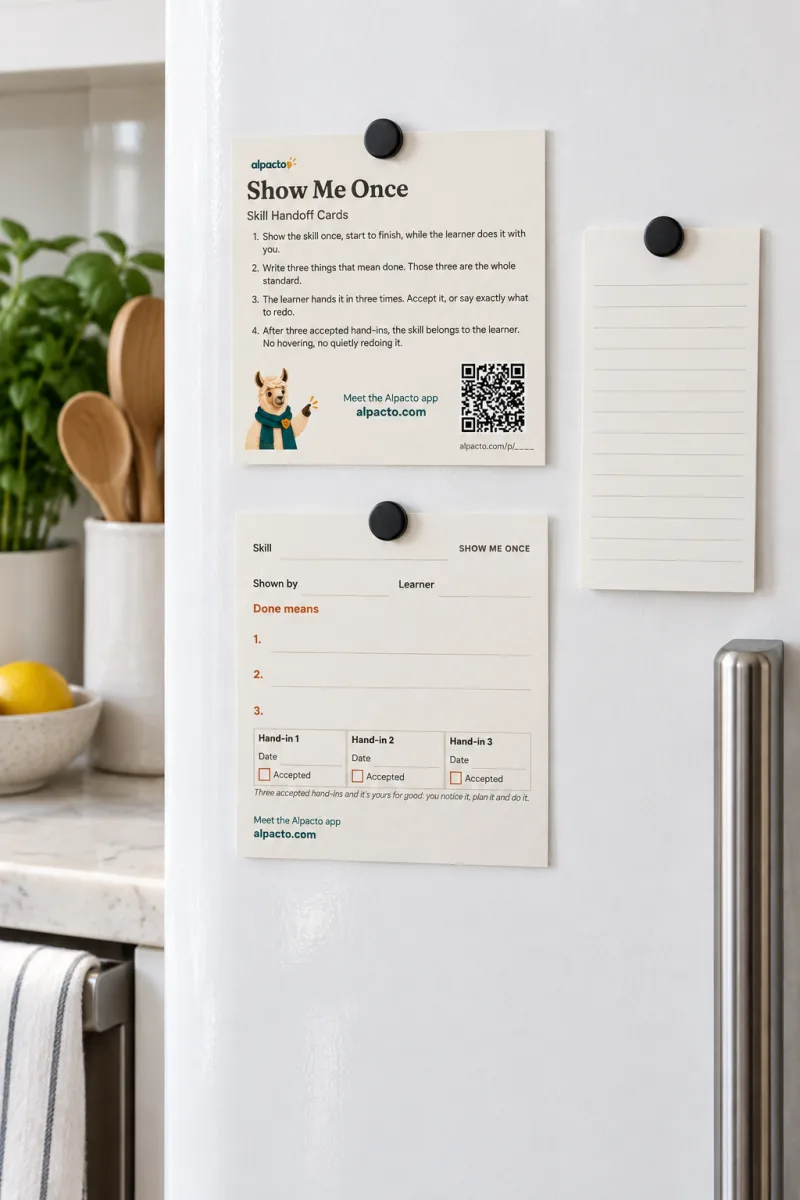
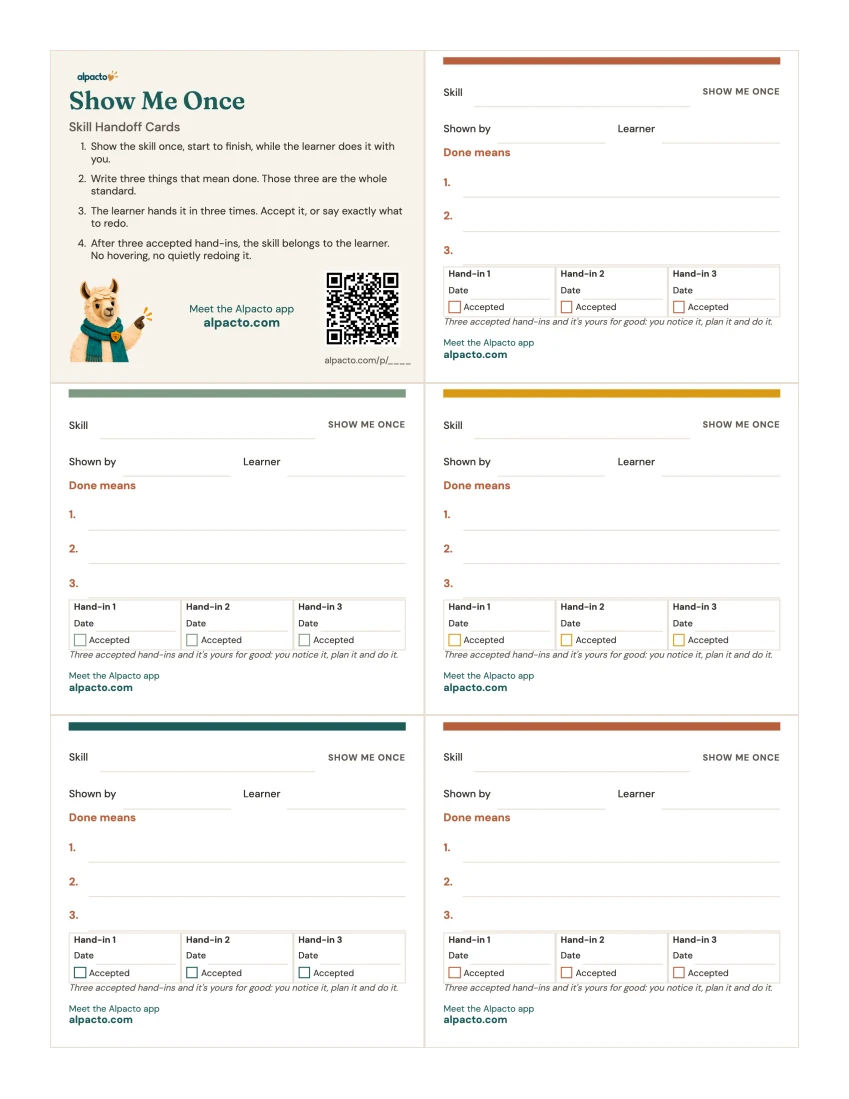
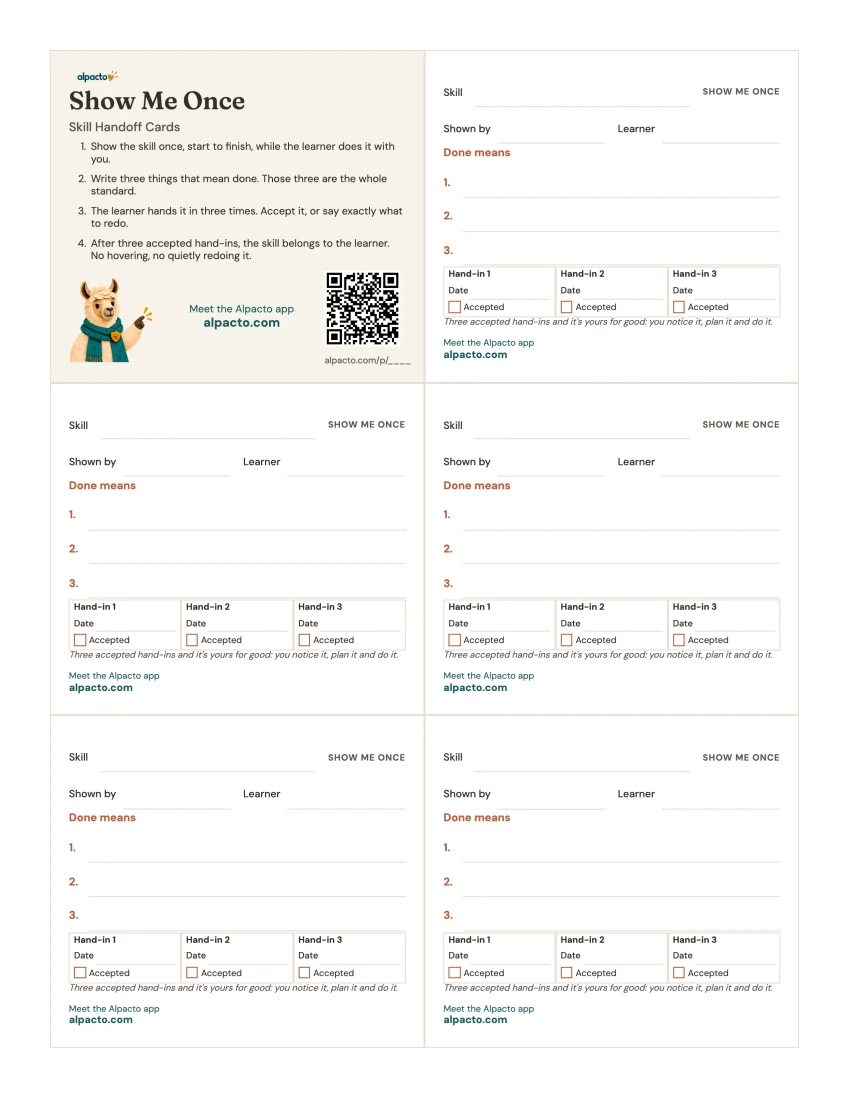
One sheet, six cards to cut out: a card with the rules and five blank cards, one per household job. Each card has an end. After three accepted hand-ins, the job belongs to the person who learned it.
- Cards
- Six per page, 3.75 × 3.33 in each: the rules card and five skill cards
- Paper
- US Letter and A4, portrait, print at 100%
- Versions
- Blank, and a fillable PDF with 60 fields
- Designs
- Multicolor and minimal
What is on each card
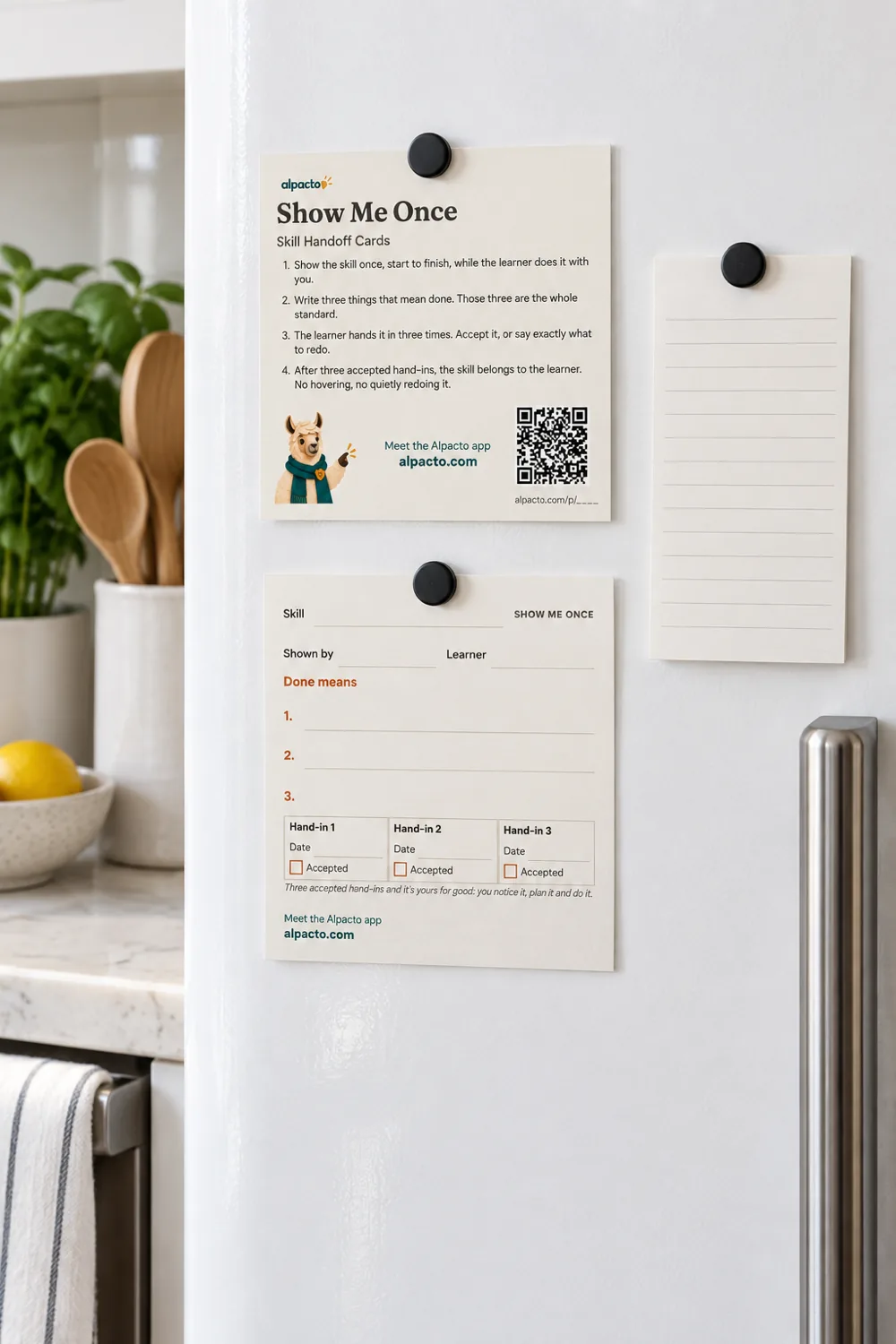
Skill, Shown by, Learner
One job per card and the two names. No roles are printed, so a skill can go either way, between partners or roommates.
Done means
Three numbered lines. What you write there is the whole standard.
Hand-in 1, 2, 3
A Date line and an Accepted box in each of the three cells.
The printed line
“Three accepted hand-ins and it’s yours for good: you notice it, plan it and do it.”
The four rules on the Show Me Once card
- Show the skill once, start to finish, while the learner does it with you.
- Write three things that mean done. Those three are the whole standard.
- The learner hands it in three times. Accept it, or say exactly what to redo.
- After three accepted hand-ins, the skill belongs to the learner. No hovering, no quietly redoing it.
A Cleveland Clinic article on people who dodge tasks counts “You never taught me how to do this right” among the lines that shift blame. Rules 1 and 2 leave that line nothing to stand on.
They protect the learner too. A hand-in can only be sent back for a line written on the skill handoff card, never for a rule that lived in one head.
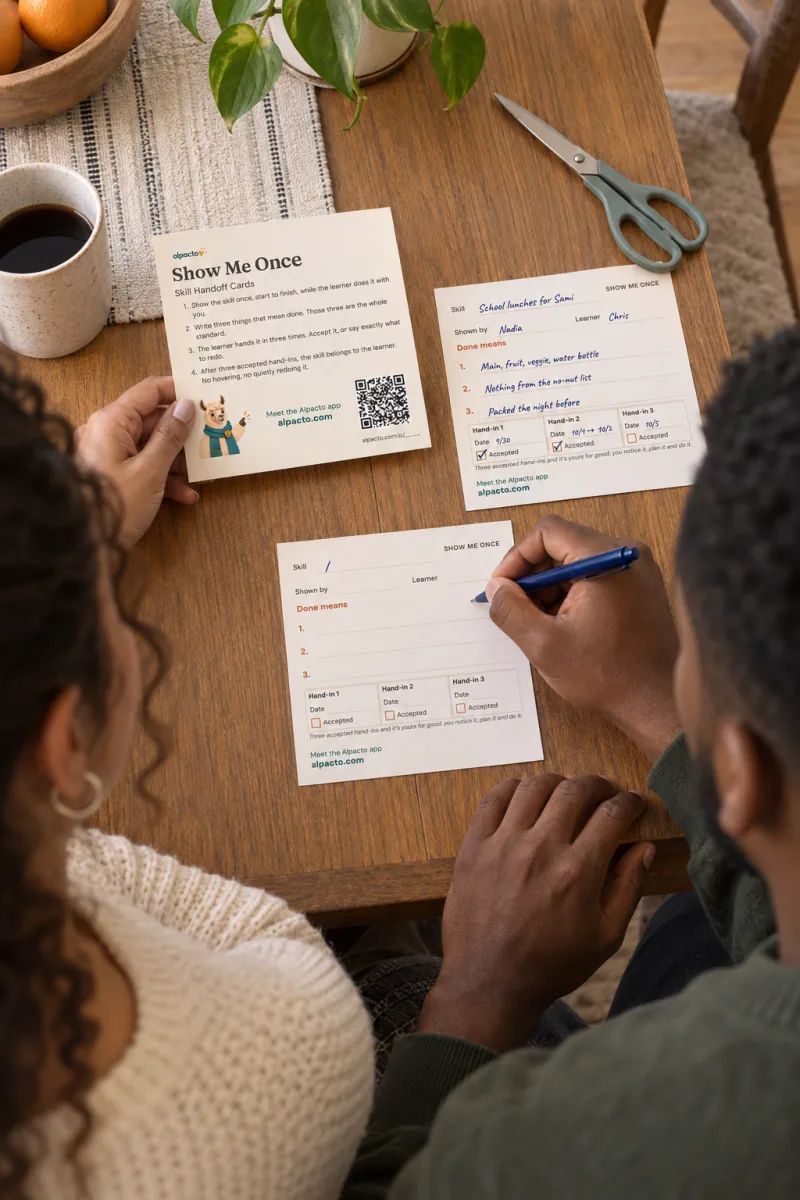
Fill in the card together, right after the first run.
Accept it, or say exactly what to redo
On the example sheet, Chris is learning school lunches from Nadia. His lines read Main, fruit, veggie, water bottle, Nothing from the no-nut list and Packed the night before.
His second hand-in, on 10/1, was sent back and redone on 10/2, which was accepted. The third, dated 10/5, has no tick yet.
A redo names the missed line and says nothing about the person. Psychologist Susan Albers sets the bar in the same place: “what you want to see is an attempt to improve.” A second date in the same cell is that attempt, on paper.
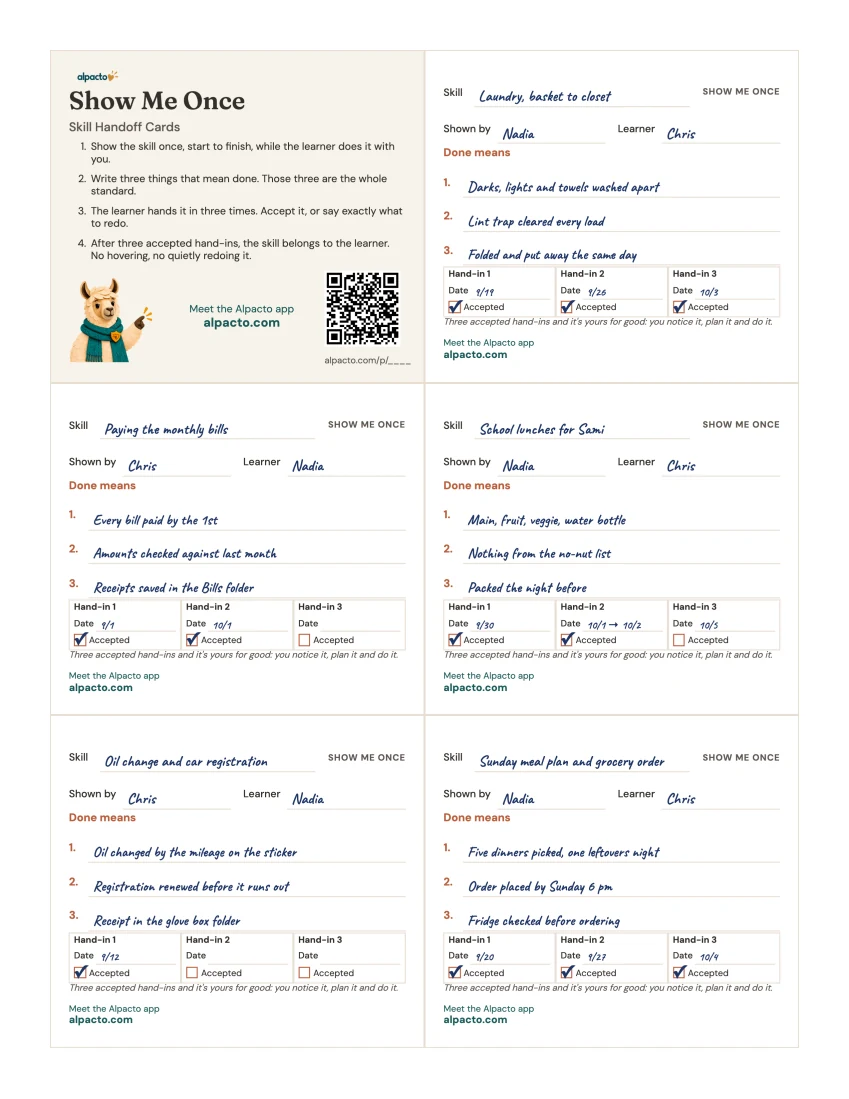
The filled-in example, minimal design: skills go both ways.
Three accepted hand-ins, and the skill changes hands
The printed line hands over the noticing and the planning along with the doing. Eve Rodsky’s Fair Play method defines ownership the same way, “from conception, to planning and execution (CPE)”.
Rule 4 binds the person who showed. Cleveland Clinic’s advice to the partner who keeps stepping in is to resist taking over and wait it out.
On the example, Nadia hands Chris three skills and Chris hands Nadia two: the monthly bills and the car. Laundry and the Sunday meal plan have three ticks each, so those two are Chris’s now.
- To decide who takes which job first: the chore split calculator.
- For jobs to pick from: the household chores list.
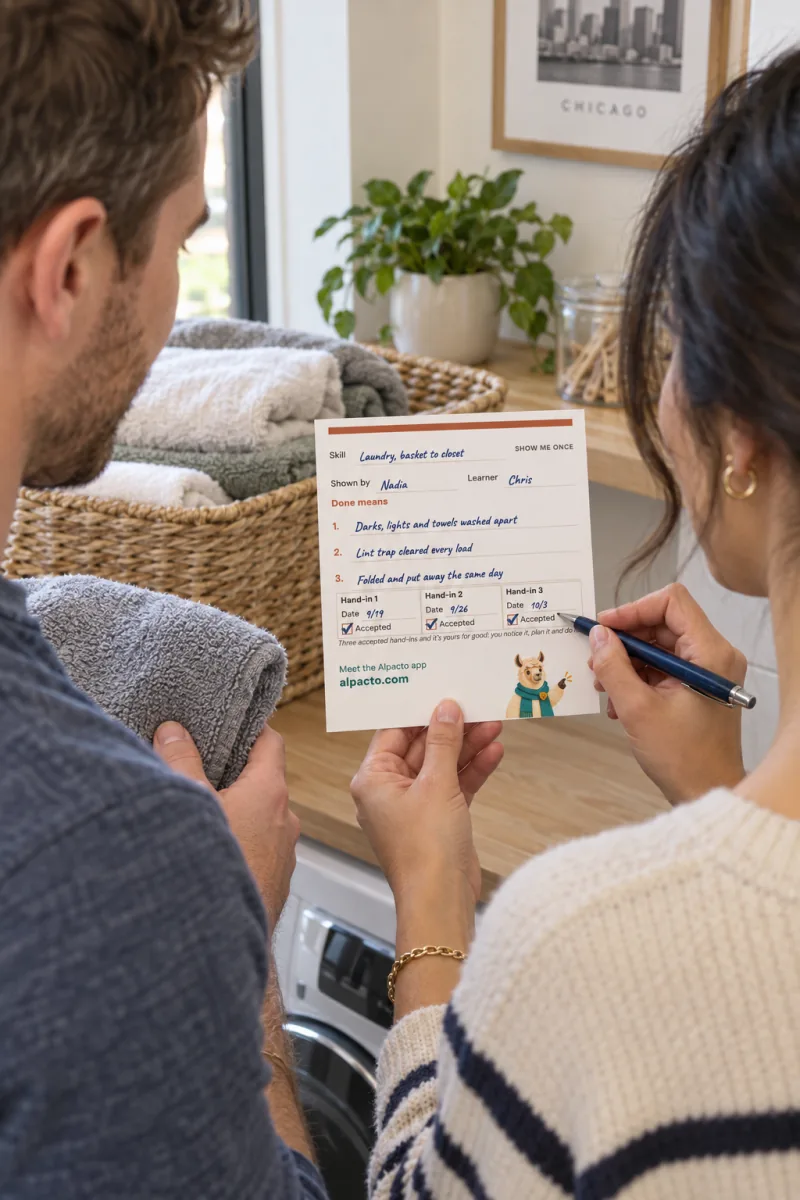
The third tick on the laundry card.
Download the skill handoff cards
Two designs, each in US Letter and A4, to print or to type into, free with no email or account. Print at 100% and cut on the lines.
Questions people ask
Who writes the Done means lines?
Both of you, before the first hand-in. The person who shows knows what matters; the learner checks that each line can be seen at a glance, like Lint trap cleared every load.
What if a hand-in is not accepted?
Say which line was missed. The learner does it again and writes the new date in the same cell, as on the example lunch card.
Is it free, and can I type on it?
Yes to both. The fillable PDF has fields for the skill, both names, the three lines and the dates, plus the Accepted boxes; the rules card has none.
Other free printable sheets
Save these cards to Pinterest
Pin it now and the cards are there when one of you finally says “show me once”. A skill, what done means, and three hand-ins before it is handed over.
Each hand-in, as a task
In Alpacto a task is one thing, done once: you add the standard of done, one person marks it complete and the other confirms. Once a skill has changed hands, it can become the learner’s routine, with a shared rhythm, visible check-ins and a streak.