
Alpacto › Kids & Rewards
Printable reward chart, chore charts by age, and the part the charts leave out
A printable reward chart is the easiest thing to find on the internet and the easiest thing to abandon: most parents have a drawer of them that lasted a fortnight. This hub is about the part the charts leave out: what a child is actually agreeing to, what the reward buys, when a sticker chart printable helps and when it backfires, and how to fade a chart out instead of watching it die. Chore charts by age, allowance, screen time, and one family board where the coins are visible to everyone.
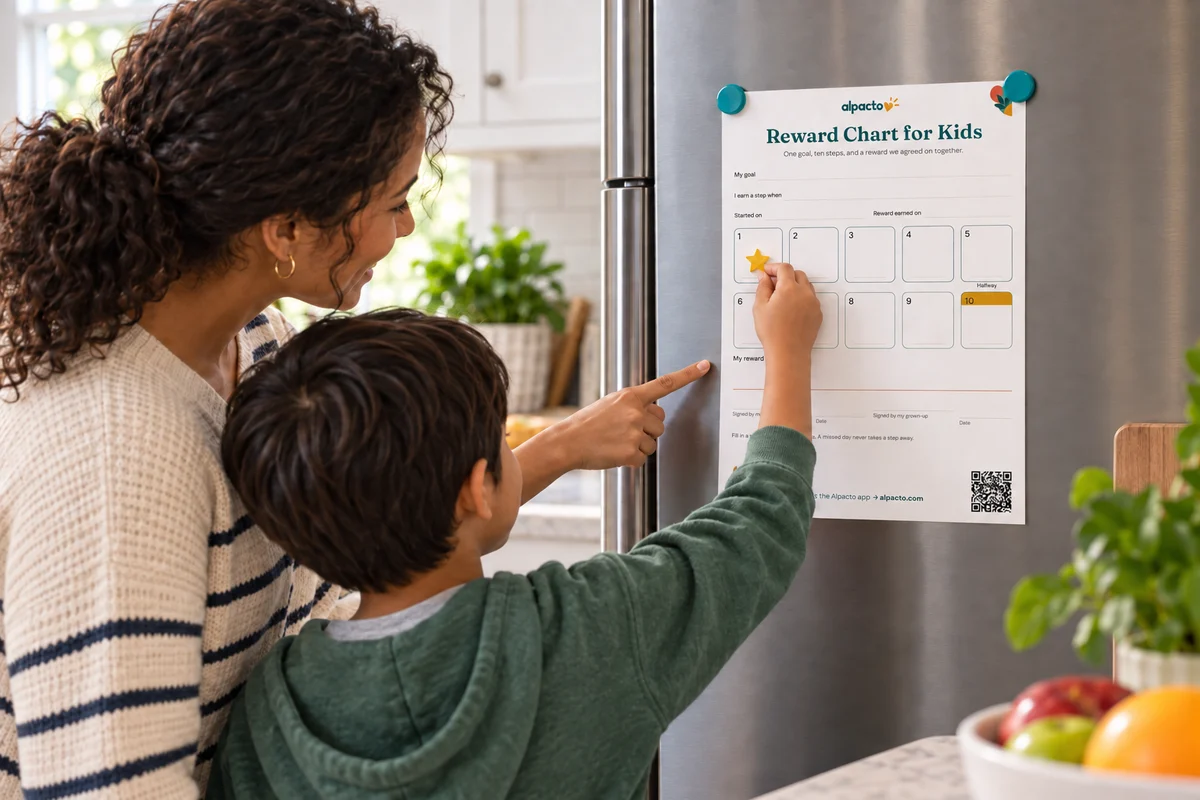
In short
A printable reward chart works for jobs a child would not do anyway, and it works for a few weeks. It backfires when it pays for things the child already enjoyed, and it dies when the reward is vague or the adult stops checking. The fix is a chart with a clear job, a clear price, a reward the child chose, and a plan to stop using it.
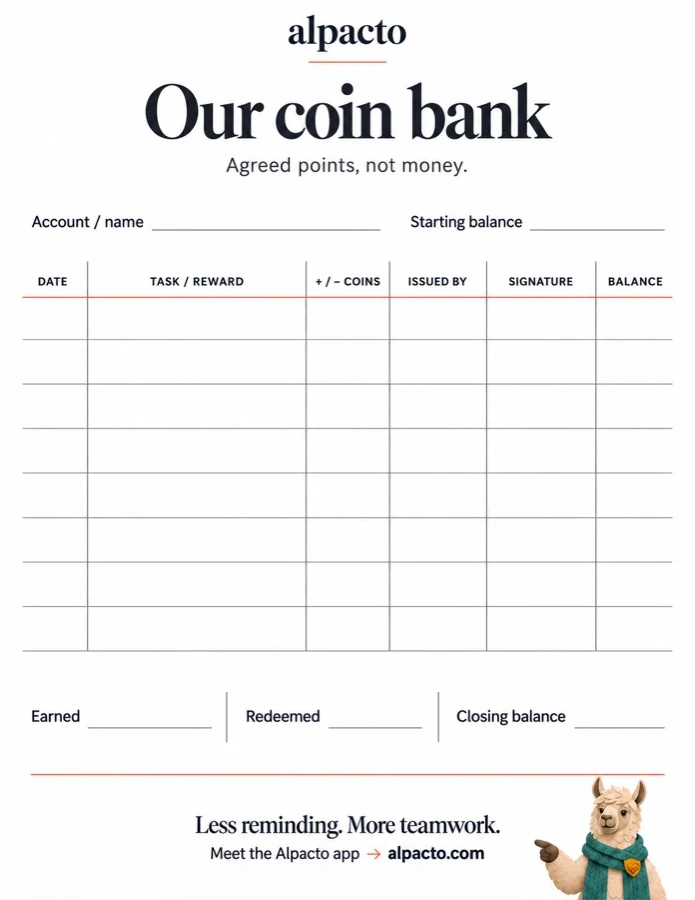
On paper, the coin bank and reward list from the printables work for a family: one ledger of coins earned, one list of rewards with prices the family wrote. In the app, the same board is a set of pacts between a parent and a child.
When a printable reward chart helps, and when it backfires
The research on rewards and motivation is clearer than the parenting blogs suggest. A meta-analysis of 128 studies found that expected, tangible rewards lower a person’s own interest in an activity they already found interesting. Pay a child for drawing and the drawing stops when the payment stops.
The same review found no such effect for tasks that were dull to begin with. Emptying the dishwasher was never going to be intrinsically rewarding, so a reward chart for chores does not take anything away. It gives a dull job a visible end and a reason.
So the rule for a reward chart is simple. Use it for chores and routines, not for reading, drawing, or being kind. Make the reward something the child chose from a short list, keep the price visible, and plan from day one how the chart fades out when the habit is there.
Chore charts by age: what a child can own, not just do
Most childrens chore charts list tasks a child can perform. The more useful question is what a child can own: notice it needs doing, do it, and check it. A five-year-old can put toys in the box when asked; an eight-year-old can own “the toy shelf is clear before dinner” without being asked.
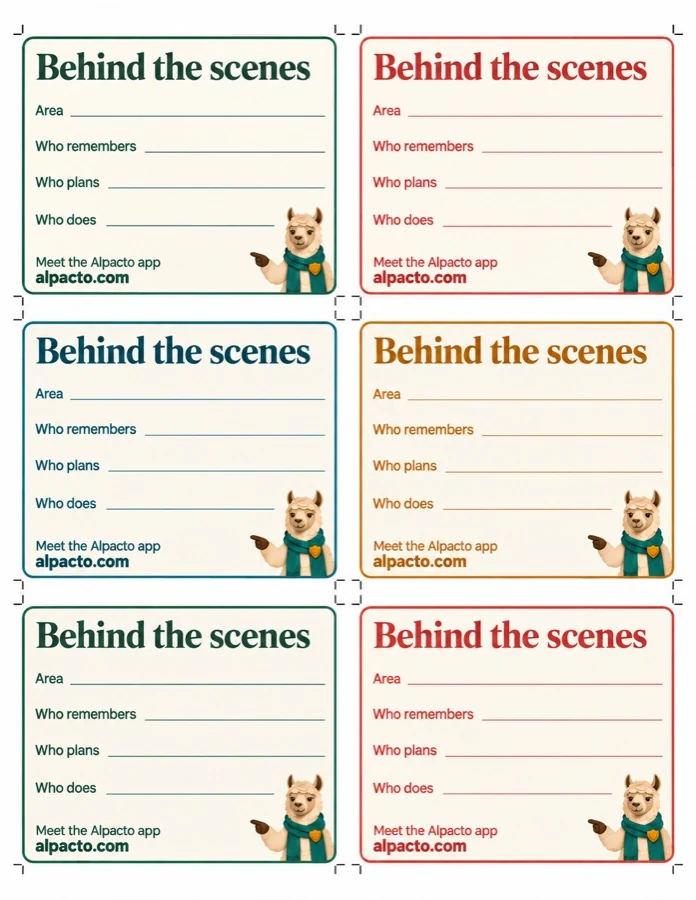
That is why a weekly chore chart for the whole family should have the same shape as the adults’ chart: zones instead of tasks, a standard of done per row, and a name column for every person in the house, parents included. Kids copy what they see, and a chart the adults follow is the first reward system in the home.
The same test works at any age: if a child can notice, do and check the job, the job can be theirs. If they can only do it when asked, the row belongs to an adult for now, and the chart should say so.
One board, every name, the coins in plain view
A family board works better than a sticker chart printable per child: one weekly sheet for the whole household, adults included, with the coins each person earned visible to everyone. It replaces three separate charts with one agreement the family made together.
Coins are spent on a reward list the family wrote: a movie pick, a later bedtime on Friday, a trip to the pool. Prices are visible, so a child learns what a job is worth and what a reward costs, which is the whole point of an allowance without the arguments about money.
In the Alpacto app the same board is a set of pacts between a parent and a child aged 13 or over, with coins counted by the app and the reward list shared. Younger children use the paper board, or a parent’s screen.
Printables that work for a family today
Reward chart for kids
One goal, ten or twenty steps, and a reward you both sign before the first step.
printableSticker chart
One week, up to five goals, a square for every day, and a box for the reward and the stickers it takes.
printablePotty training chart
Four weeks, a square for “I tried” and a square for “I went” each day, and a reward written before the week starts.
printableAll printable charts for kids
Eight sheets sorted by the job: potty, stickers, rewards, behavior, chores, teens, routines and screen time.
printableAllowance by age
What US families pay from 5 to 17, fixed or earned, and a chart the child keeps.
guideToken economy at home
What earns a token, when the shop opens, what a reward costs, and how to fade it out.
guideChore chart for the adults
Kids copy what they see. The adults’ chart on the same fridge is the first reward system in the house.
chartQuestions parents ask
Do reward charts work for kids?
For chores and routines, yes, for a few weeks at a time, as long as the job and the price are clear and the reward was chosen by the child. For things the child already enjoys, the research says rewards can lower interest, so keep the chart for the dull jobs.
What is the difference between a behavior chart printable and a chore chart?
A behavior chart pays for how a child acts; a chore chart pays for a job with a visible end. Jobs are easier to agree on and easier to check, which is why the charts here are chore charts, and why the reward list is separate from the chart.
Where is the printable reward chart to download?
There are eight kids charts in the printables for kids. The three most asked for: the reward chart for kids with ten or twenty steps, the sticker chart for one week and up to five goals, and the potty training chart for four weeks. Each prints in US Letter and A4, and each has a PDF you can type into before printing.
At what age can a child use the Alpacto app?
From 13. Younger children use the paper board or share a parent’s screen; the pacts and coins are the same.
The board, in the app
Parents and kids share the same pacts; coins are counted for everyone and the reward list is one the family wrote together.