
Alpacto › Free printables › Kids › Behavior chart
A behavior chart with three goals and a line for what went well
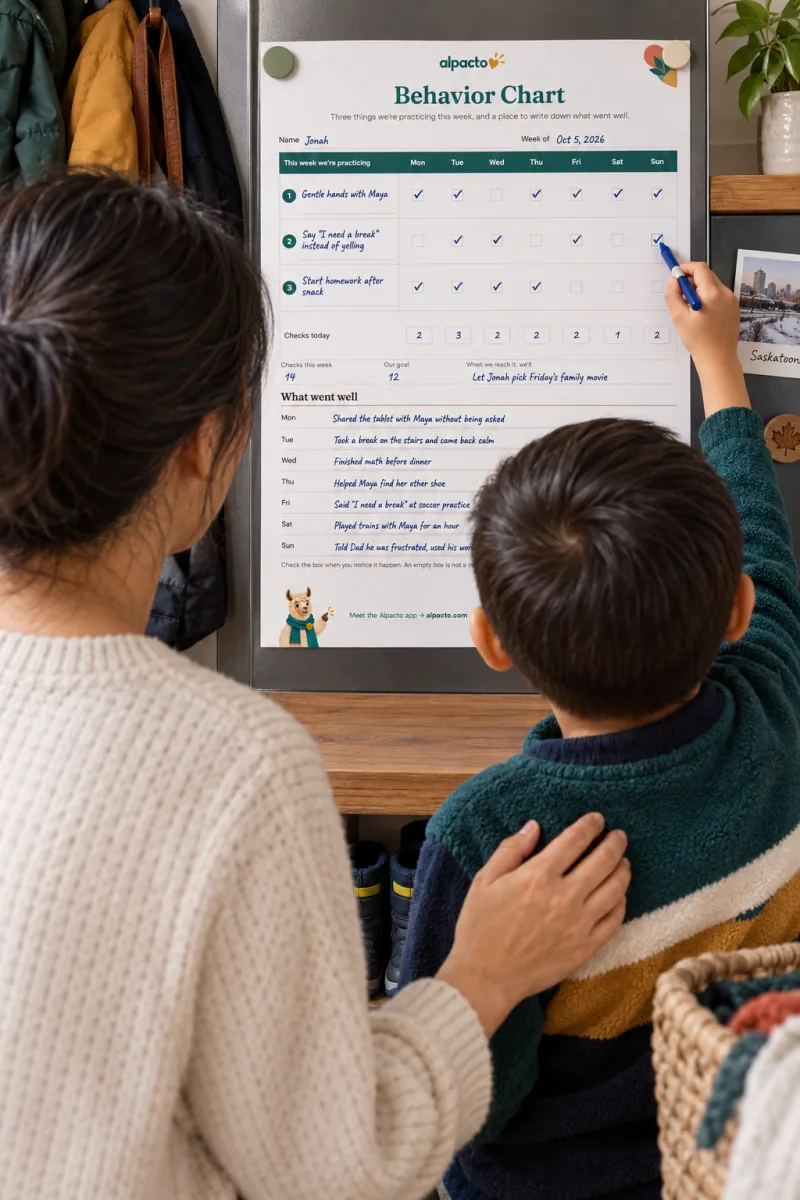
This behavior chart for home holds one week and three goals, with a box for each goal on each day. Every evening a grown-up adds up the checks and writes one thing that went well. Nothing on the sheet records a bad day: no clips, no colors, no crosses.
- Sheet
- One page: three goals, Monday to Sunday, a weekly goal and seven lines for what went well
- Paper
- US Letter and A4, portrait
- Versions
- Blank and a fillable PDF with 43 fields; the filled-in example is below
- Designs
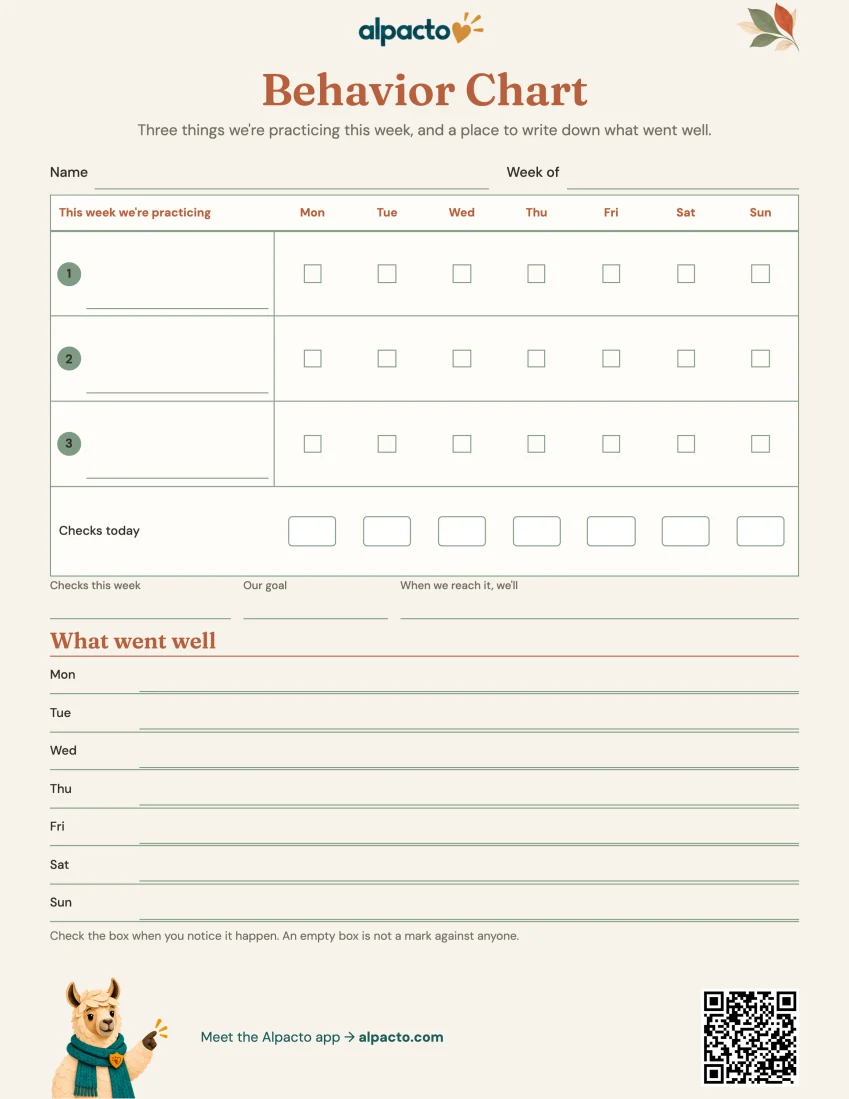
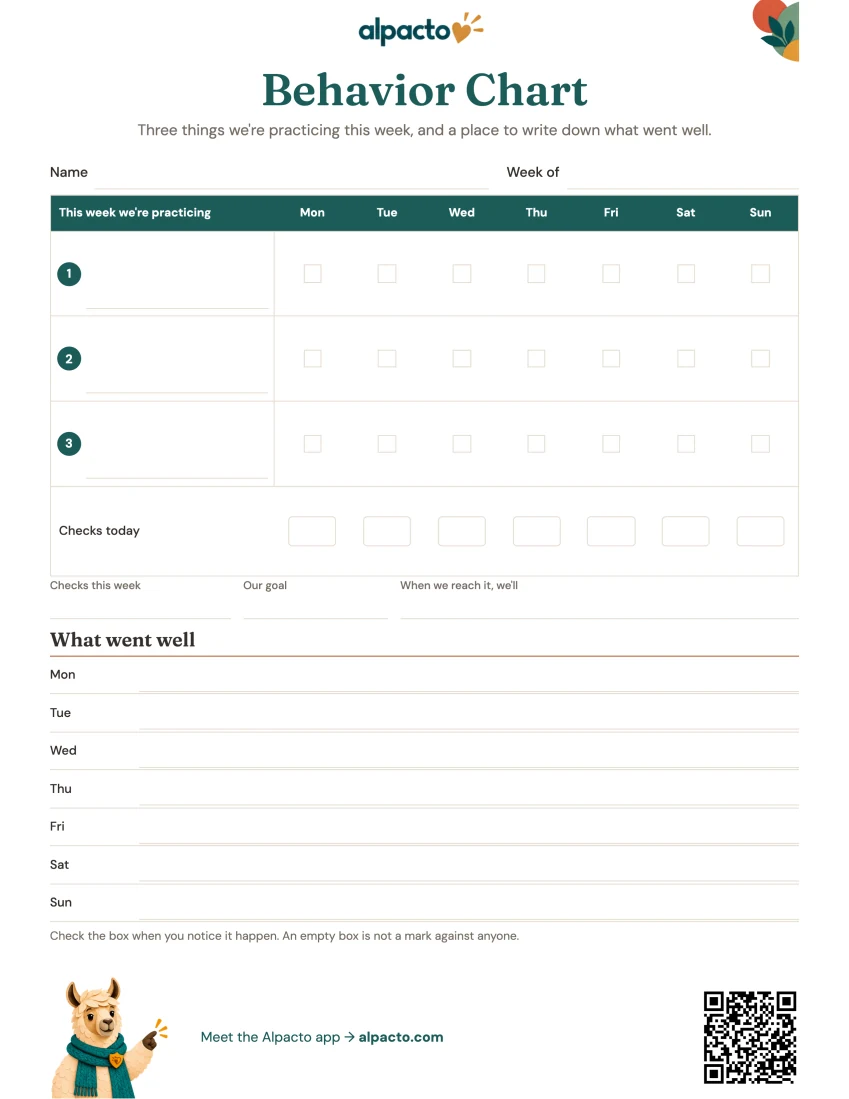
- Minimal, warm and color
- Ages
- About 4 to 10; no age is printed on the sheet
What is on this behavior chart printable
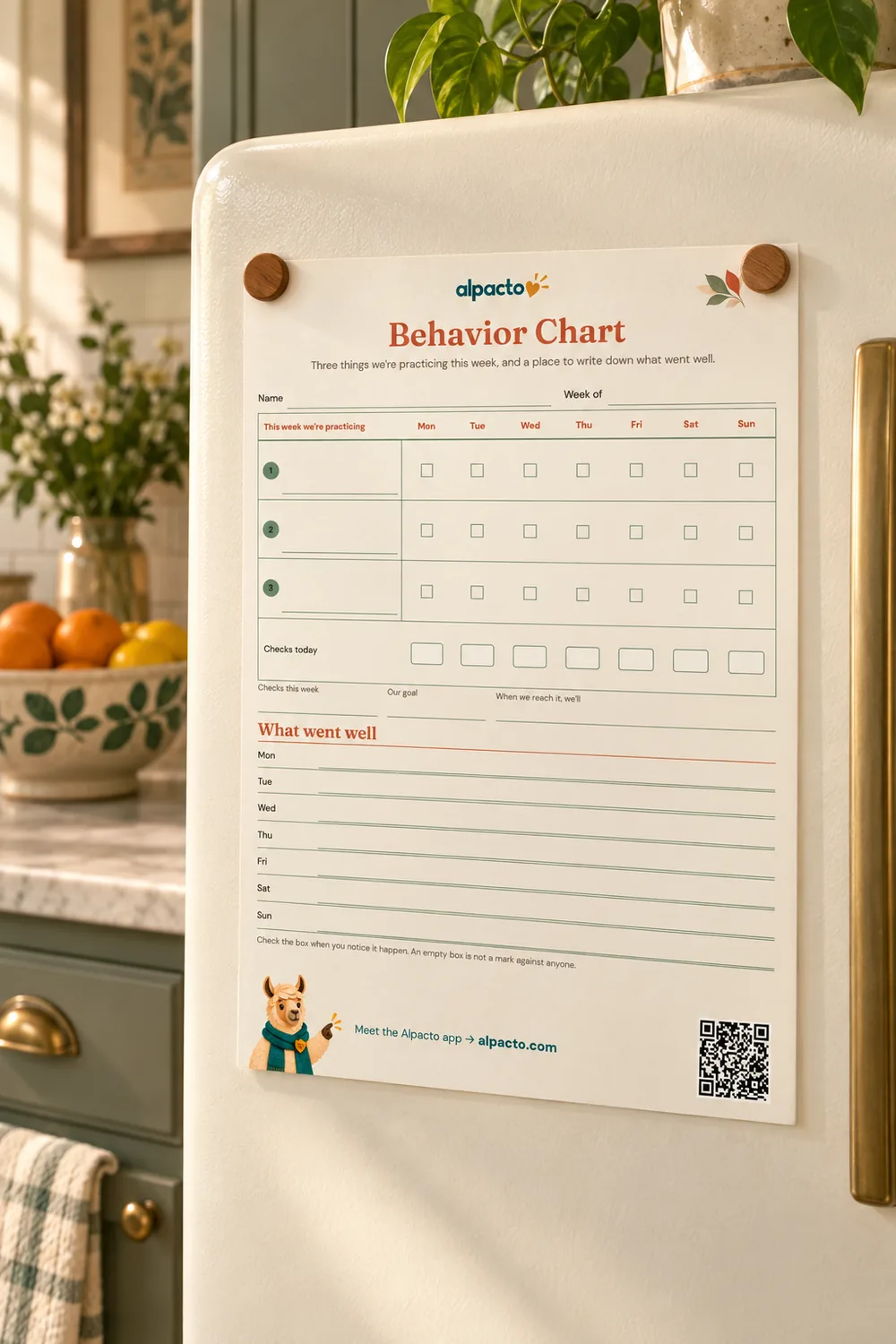
This week we’re practicing
Three numbered rows to write in, and a check box for every day, Mon to Sun.
Checks today
A box under each day for its count, so the Sunday total takes a minute.
Our goal
Checks this week beside the number agreed on Monday, then When we reach it, we’ll: the reward.
What went well
Seven lines, one per day, for a moment that went right.
The line at the bottom
“Check the box when you notice it happen. An empty box is not a mark against anyone.”
Write the behavior you want to see
The CDC tells parents of toddlers and preschoolers to “State exactly what you want to see your child do” and to keep no and stop out of the goal. Its example swaps no hitting a sister for sharing toys with her.
| Said out loud | Row on the example sheet |
|---|---|
| Be nice to your sister | 1. Gentle hands with Maya |
| Stop yelling | 2. Say “I need a break” instead of yelling |
| Do your homework | 3. Start homework after snack |
Each row is something you can see happen, so the box gets its check on the spot. Psychologist Jennifer Hartstein advises that the first behavior “should be achieved easily to give your child a sense of mastery”. On the example that is row 3, checked every day there was homework.
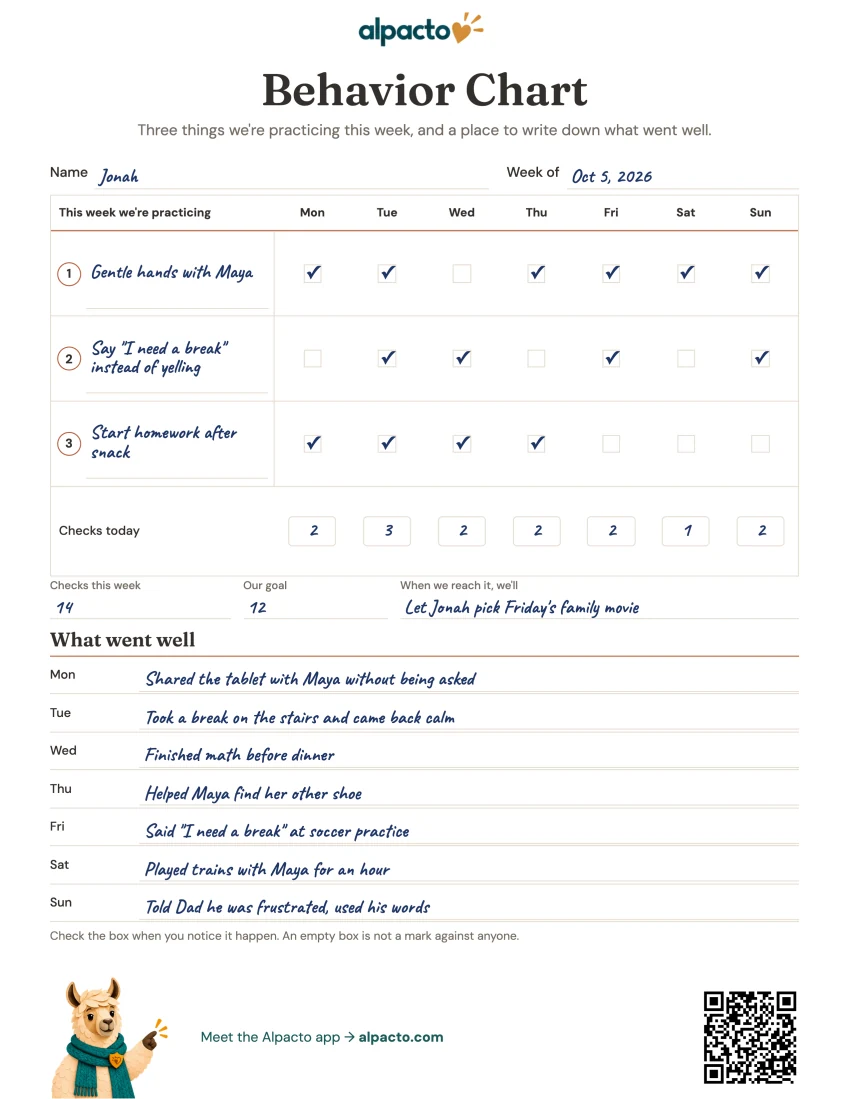
The filled-in example, minimal design.
Why this chart has no clips and no red, yellow or green
A behavior clip chart moves a child’s clip up or down through the day, and a traffic light behavior chart ends each day on green, yellow or red. Both keep a record of the bad moments, usually on display.
The American Academy of Pediatrics, on reward charts: “Avoid penalties and demerits. These can be humiliating or discourage your child from even trying.” A clip moved down is a demerit, even if nobody uses the word.
So this sheet only has boxes that get a check. The same AAP page allows mild consequences, such as a time-out; they stay off the chart.
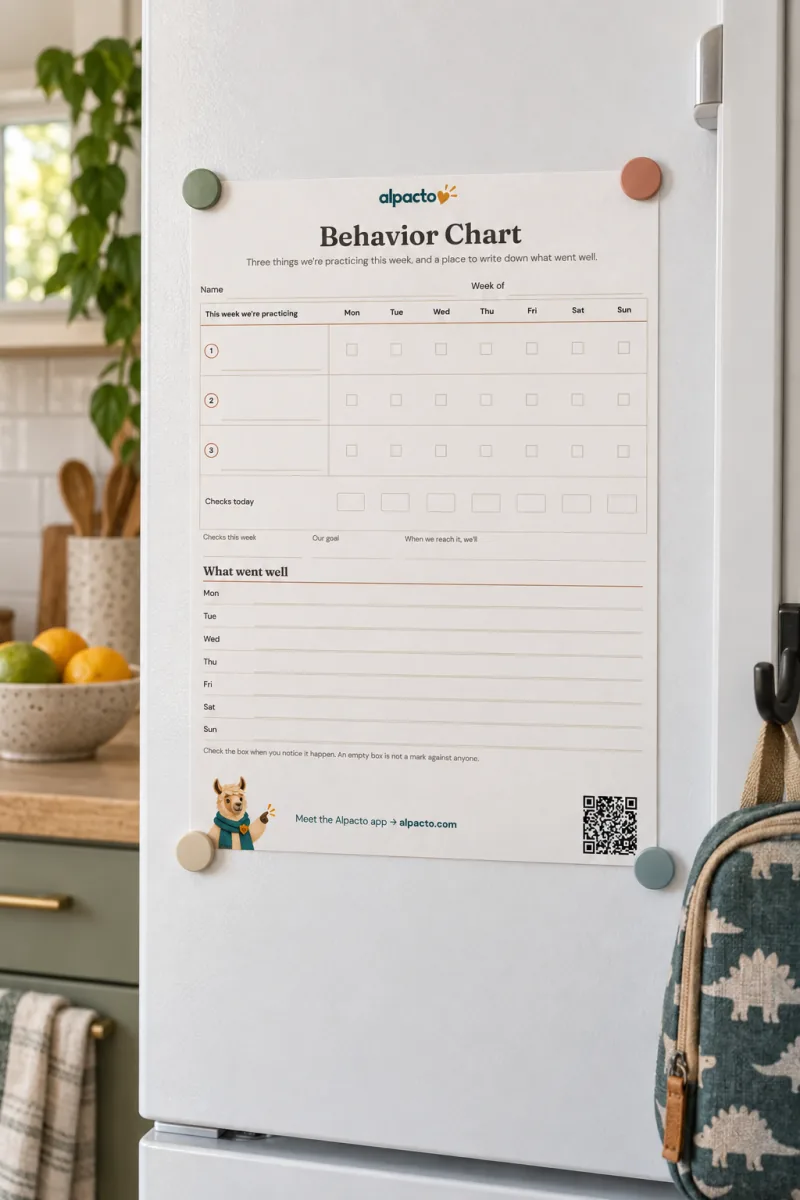
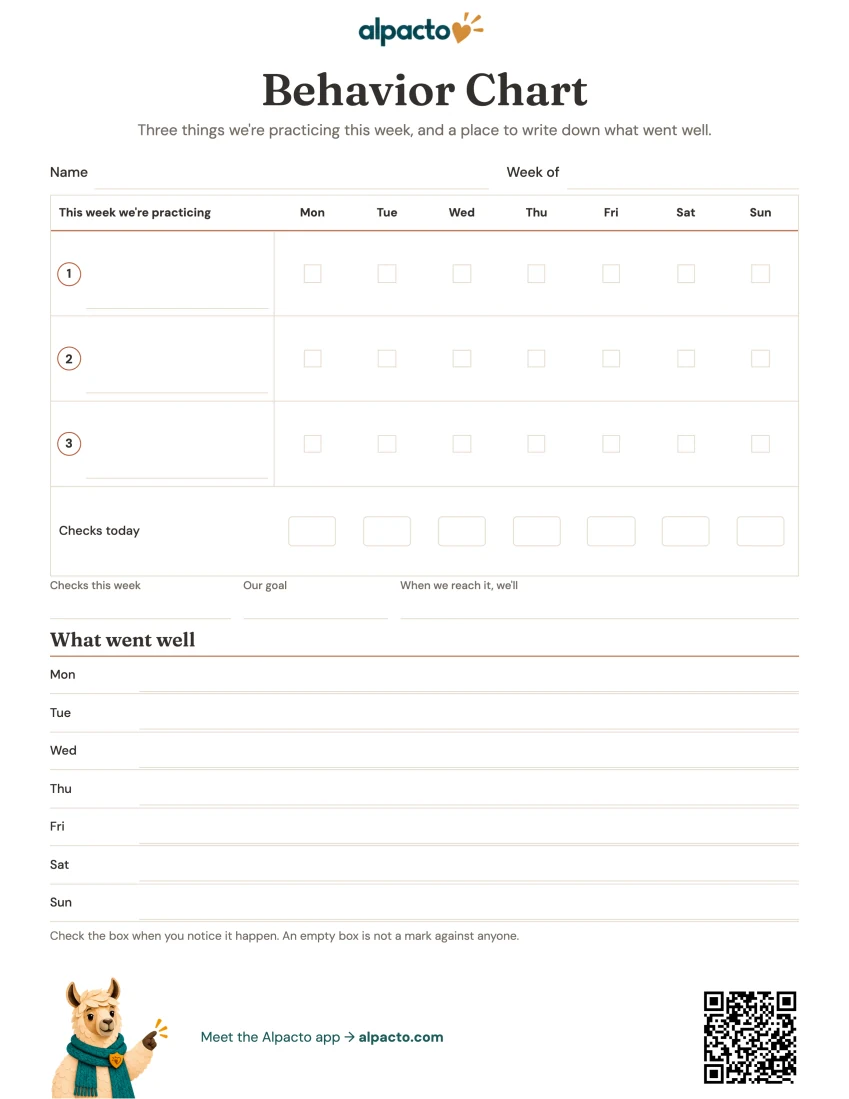
Blank on the fridge: no clips, no traffic-light colors.
What went well: one line a night
The bottom half of the sheet is for the grown-up. The AAP calls this “Catch them being good” and asks parents to “Notice good behavior and point it out, praising success and good tries.”
The CDC explains why the words matter. Labeled praise, like “I saw that you put your toys away!”, “works best because your child knows exactly what you like”, while “Great job!” gives no specific guidance.
Jonah’s lines on the example read like labeled praise: Took a break on the stairs and came back calm, Helped Maya find her other shoe. Read the line aloud at bedtime; by Sunday the sheet lists seven things he did right.
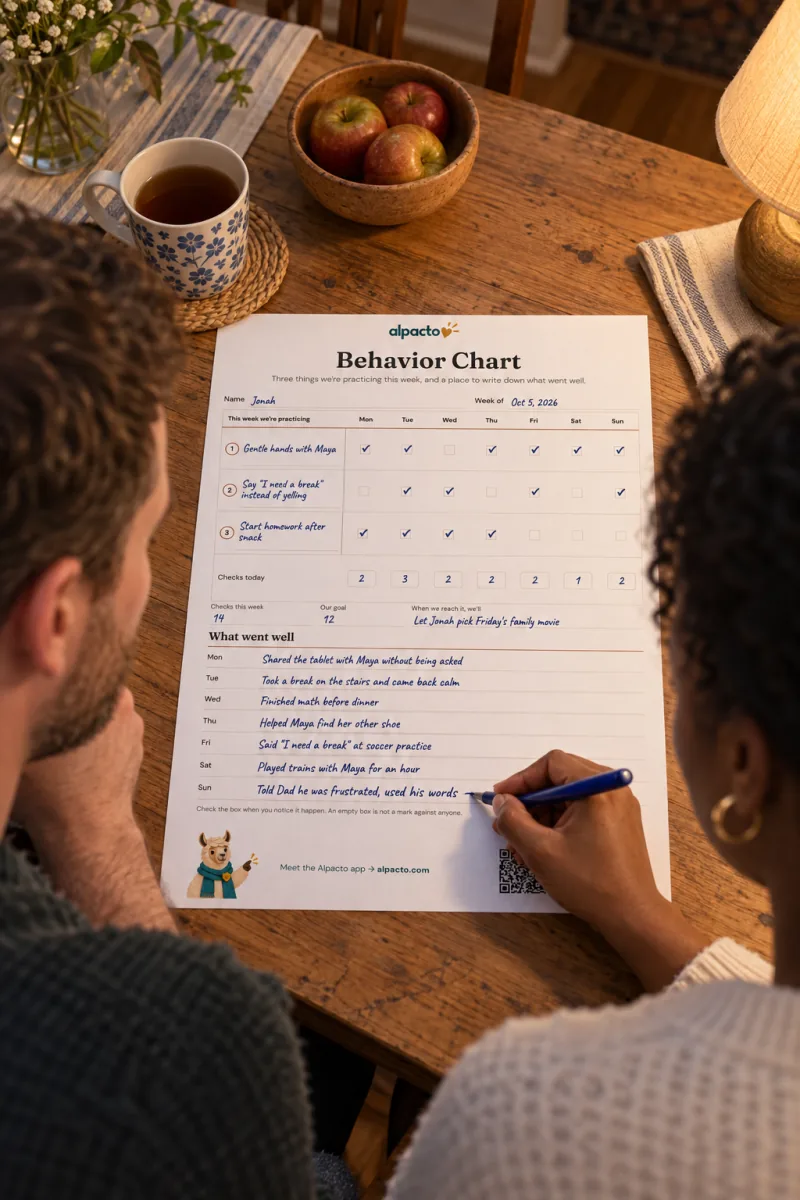
Sunday evening: the last line of the week.
A weekly behavior chart example: Jonah’s week
- Monday. Jonah, 8, and his parents write three goals, a weekly goal of 12 checks and the reward: Let Jonah pick Friday’s family movie. The AAP says children should “participate actively” in choosing rewards.
- Every day. Check a box when you see it happen. Row 3 stays empty Friday to Sunday: no homework, then the weekend.
- Every evening. Checks today runs 2, 3, 2, 2, 2, 1, 2, plus one line under What went well.
- Sunday. 14 checks against a goal of 12: Jonah picks the movie.
The week has 21 boxes, and 12 is a little over half. Set the goal for a normal week, not a perfect one, and keep it the same after a week that falls short.
Jonah and Maya are invented for the sheet’s example. By goal the checks are 6 + 4 + 4.
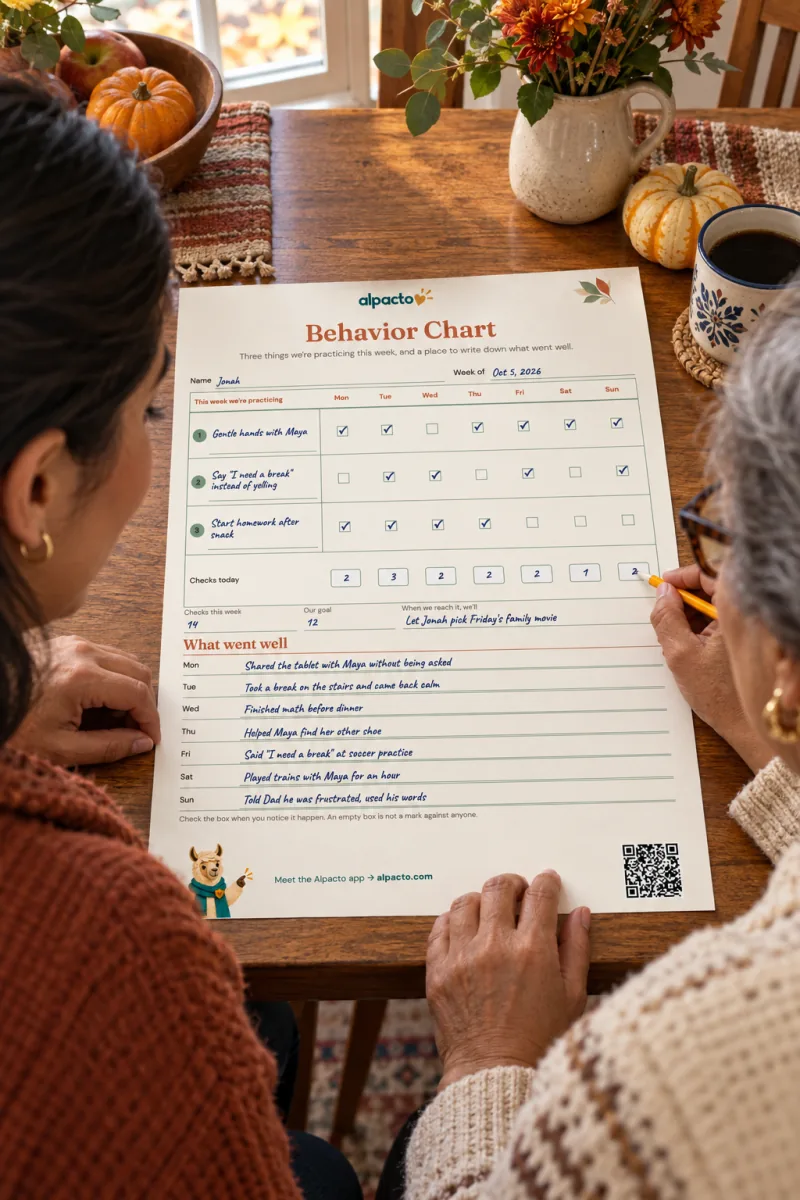
Adding up Checks today, warm design.
Download the sheet
Free printable behavior charts in three designs, each in US Letter and A4, blank or fillable, with no email or account.
What to do in week two of a weekly behavior chart
The first week of a behavior chart is easy to run. Everyone is curious, the boxes get checked, and the reward lands. The harder question is what you do on the second Monday, when one goal has been checked every day and another has barely been checked at all.
Look at each row on its own before you change anything. A row checked six or seven times is a habit, and it is time to swap it for a new goal.
A row checked once or twice usually means the goal is too big to see happen, so split it into a smaller piece. “Get ready for school” becomes “Shoes on by the door.”
Keep the weekly number honest. If the family reached 14 checks last week against a goal of 12, move it to 13, or keep it at 12 and add a new row.
If the week fell short, leave the number where it was. Lowering it teaches that the goal moves when it is missed.
Adjust the reward at the same time, and let your child pick it again. A choice they made for week one can feel stale by week three.
Siblings are the other place a chart gets tricky. Give each child their own sheet with their own three goals, so a good week for one never depends on the other.
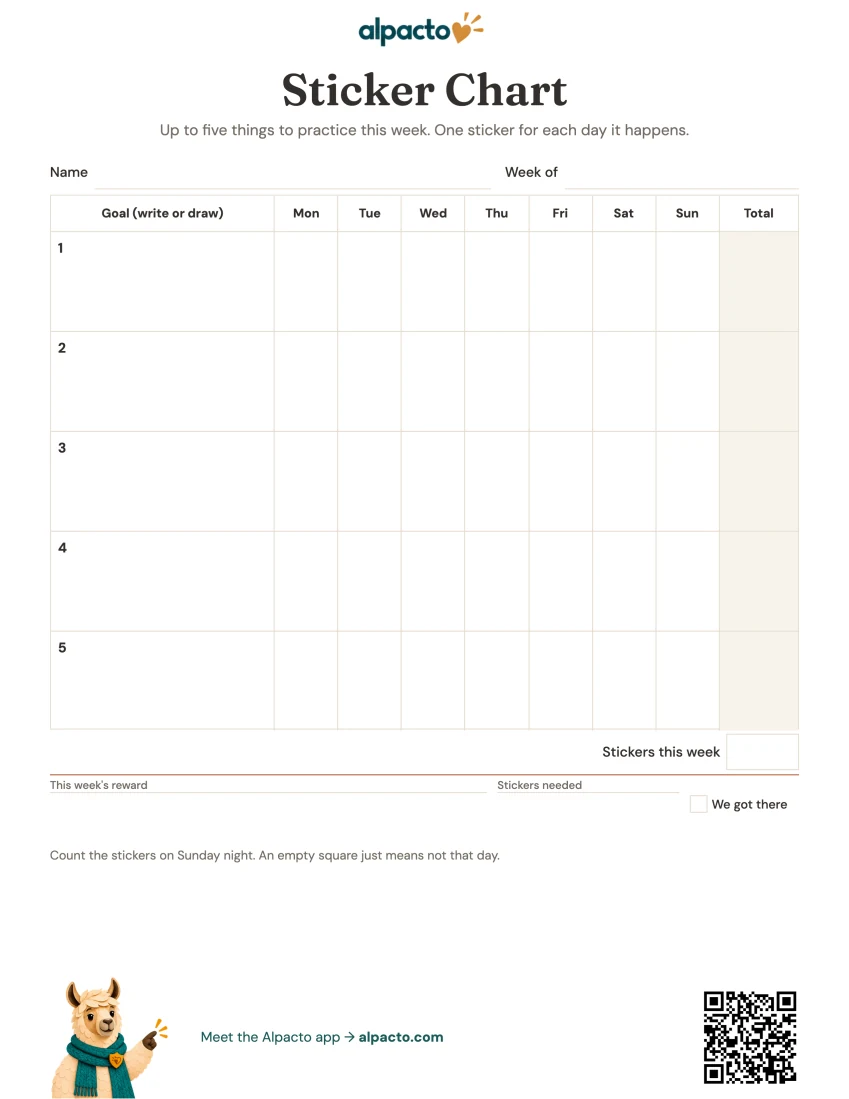
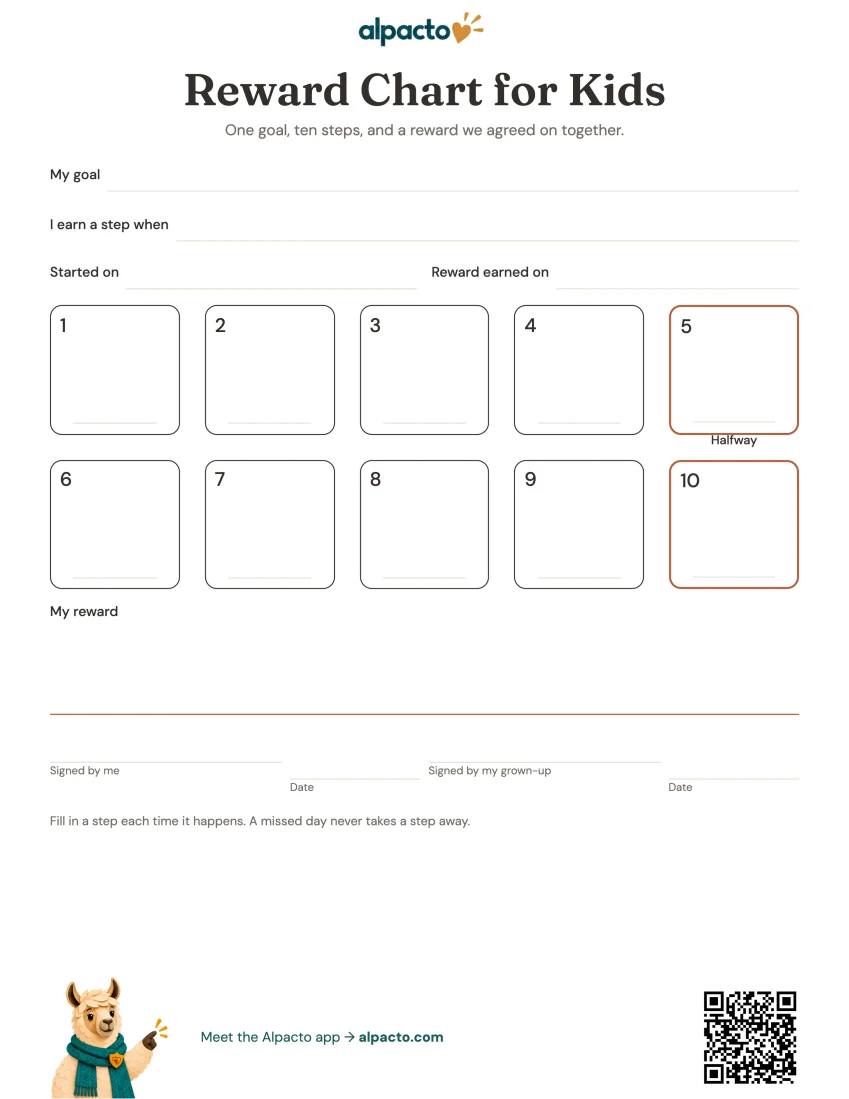
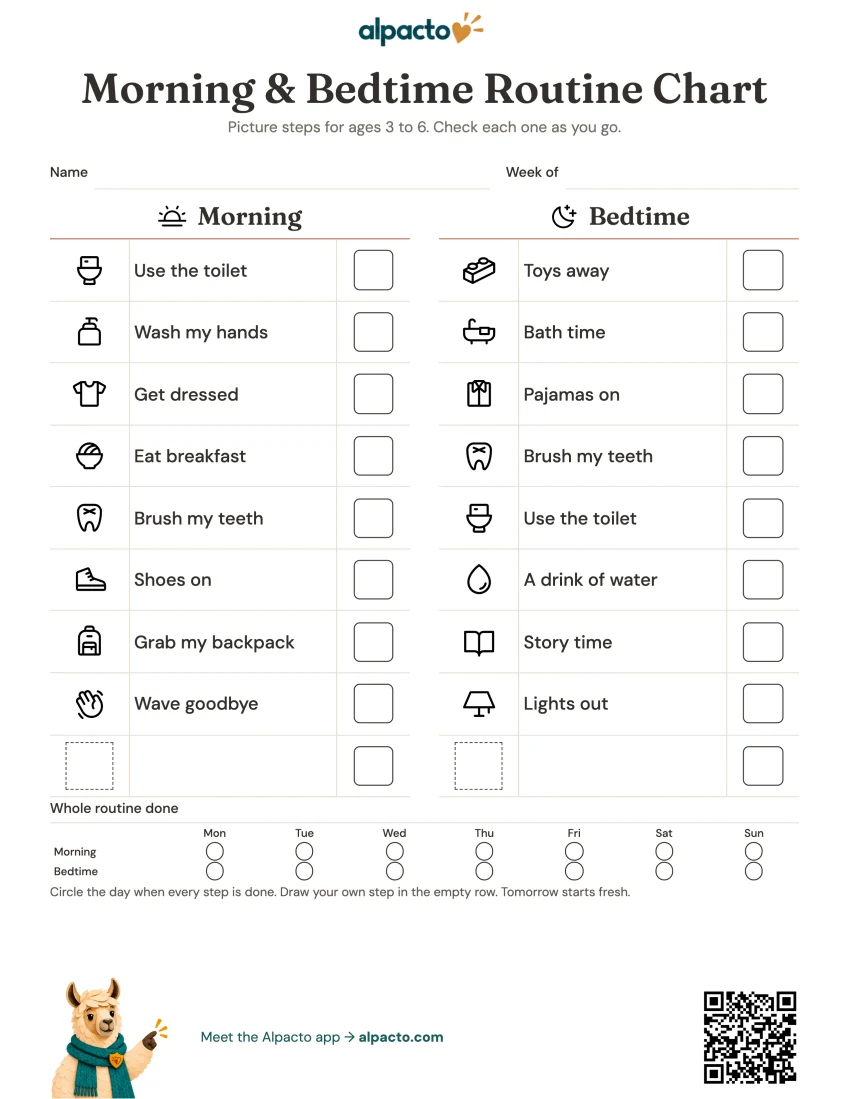
A shared family reward fits better on the family chore chart, which is built for it. For a child who needs a smaller first step, start with the sticker chart.
Questions people ask
What is a behavioral chart?
A sheet listing a few behaviors you want to see, with a mark each time the child does one, usually toward an agreed reward. This one tracks three for a week.
How can I create my own behavior chart?
Pick up to three actions you can see, write each as what to do, and agree a weekly number and a reward with your child.
Do behavior charts work for ADHD kids?
They are part of the usual approach. The AAP’s page on behavior therapy for ADHD says to “Use charts and checklists to track progress with homework or chores.” That therapy also uses consequences, and most experts pair it with medication, so the chart goes alongside your pediatrician’s plan.
What to use instead of a behavior chart?
For a child of two or three, a sticker chart is easier to read. For one goal and one bigger reward, try the reward chart. With no sheet, keep the What went well habit as bedtime praise.
When should you stop using the chart?
When your child stops asking about it. The AAP says to phase a chart out gradually, once children “lose interest or forget to ask for their points.” Or swap a mastered row for a new goal.
Other free printable sheets
Save this behavior chart to Pinterest
Pin it now and the sheet is there next Monday, when you sit down to write the three goals. Blank or fillable, three designs, US Letter and A4.
Three goals, as routines
Alpacto accounts start at 13, so a younger child stays on paper. With an older child, each goal can be a routine in the app, with a shared rhythm, visible check-ins and a streak, and coins toward a reward you chose together. Coins are never money.