
Alpacto › Free printables › Kids › Reward chart
A reward chart for kids where the reward is agreed before the first step
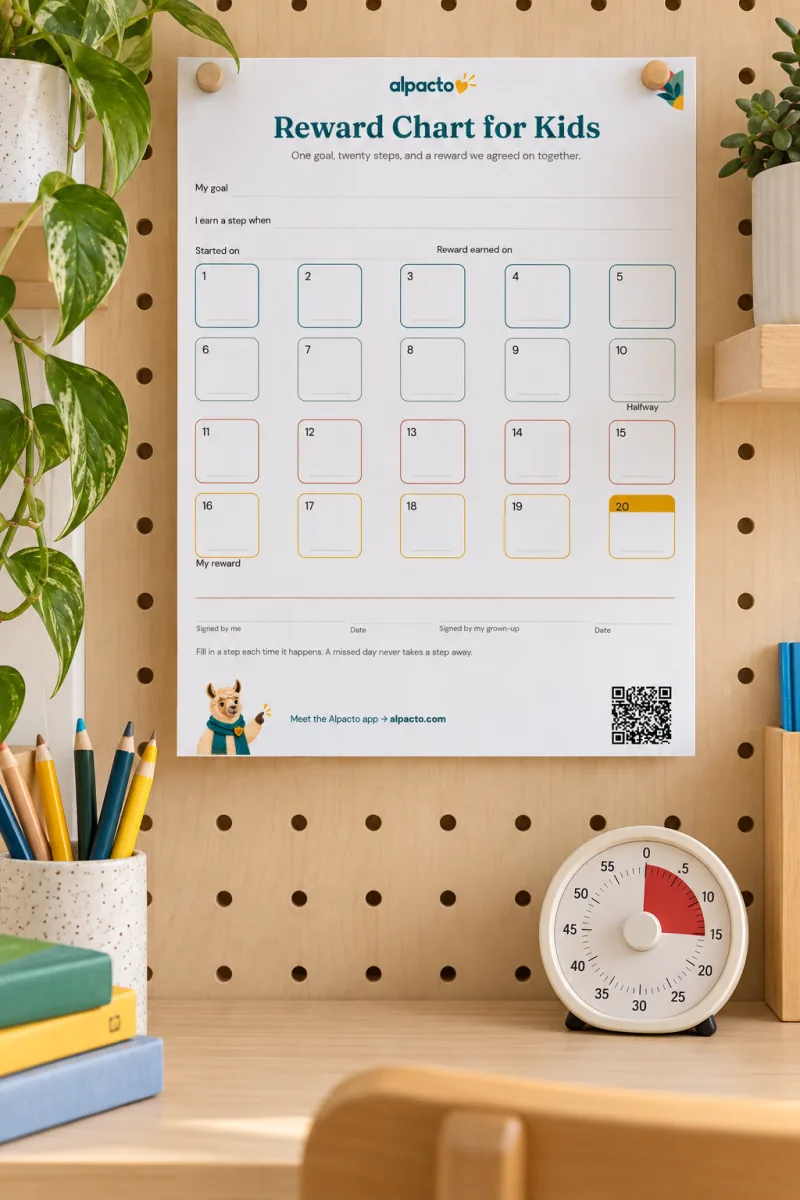
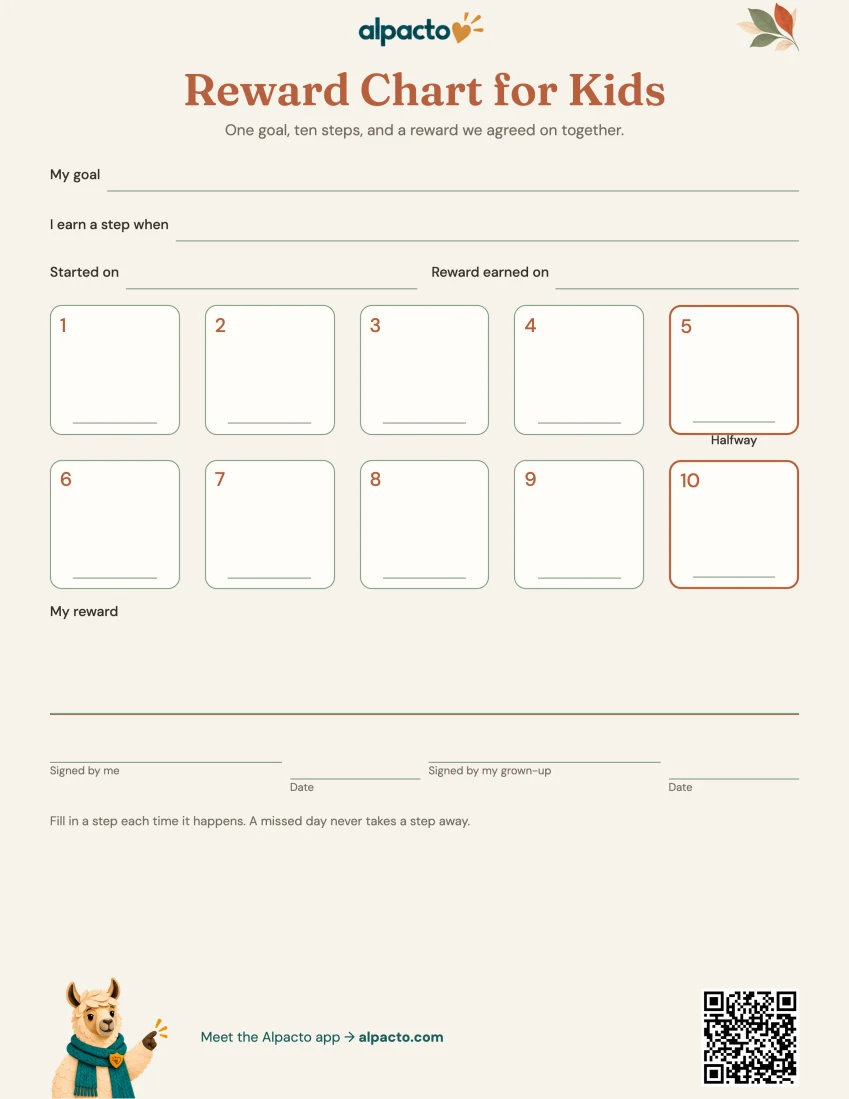
One goal, a track of ten or twenty steps, and a reward both of you write down and sign before step one. The track is not a week, so a missed day costs nothing and the next step waits. That rule is printed on the sheet, under the track.
- Sheets
- Two: ten steps and twenty steps, each one page
- Sizes
- US Letter and A4
- Steps
- Boxes of 1.3 inches on the ten-step sheet, 1.0 inch on the twenty-step one
- Versions
- Blank, a filled example, and a fillable PDF with 27 or 47 fields
- Designs
- Minimal, warm and color
What is on the reward chart for kids
One goal
A single ruled line at the top, My goal, and no second one. Two goals is how a chart turns into a chore list by Thursday.
The line that ends the argument
I earn a step when, written once and in the child’s words if they like. It settles “does this count?” before anybody asks.
A track, not a calendar
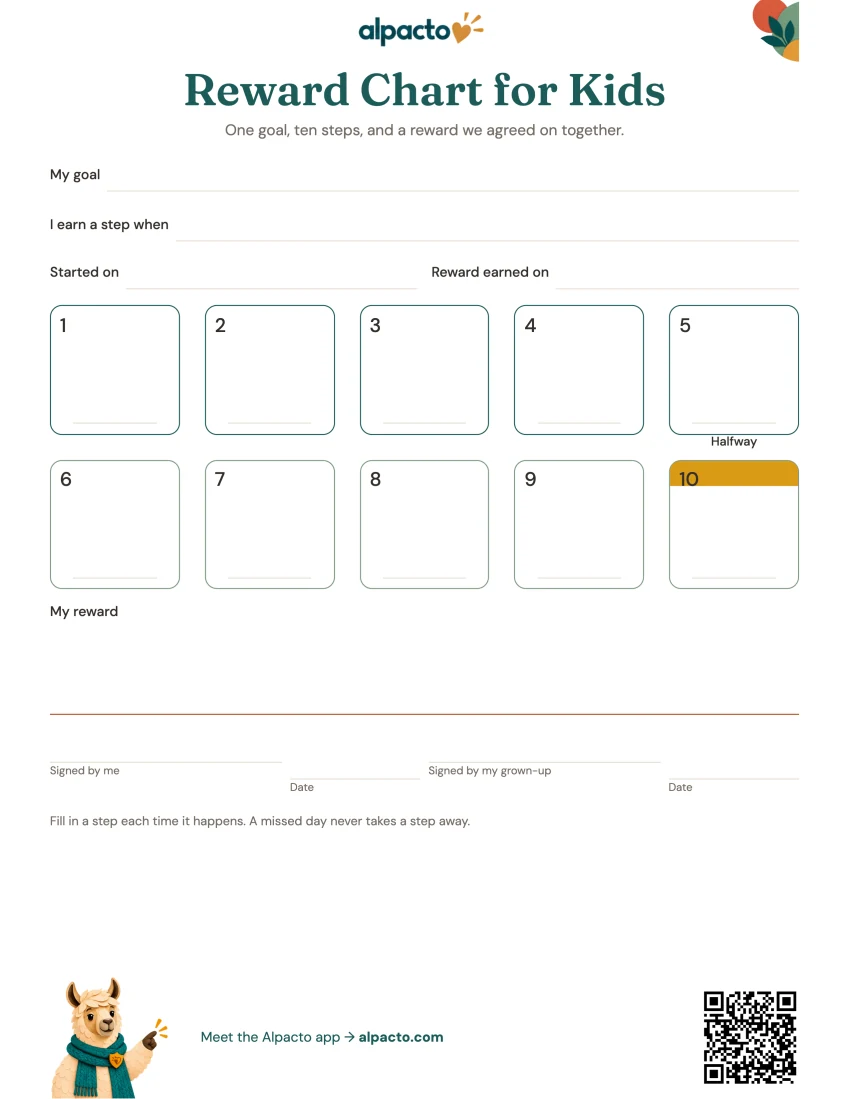
Ten numbered boxes in two rows, or twenty in four, each with a line for the date. No weekdays are printed, so nothing expires overnight.
The reward, signed and dated
My reward with an open space to write it in, then Signed by me and Signed by my grown-up, each with a date. At the top of the sheet, beside Started on, the field Reward earned on waits for the day it arrives.
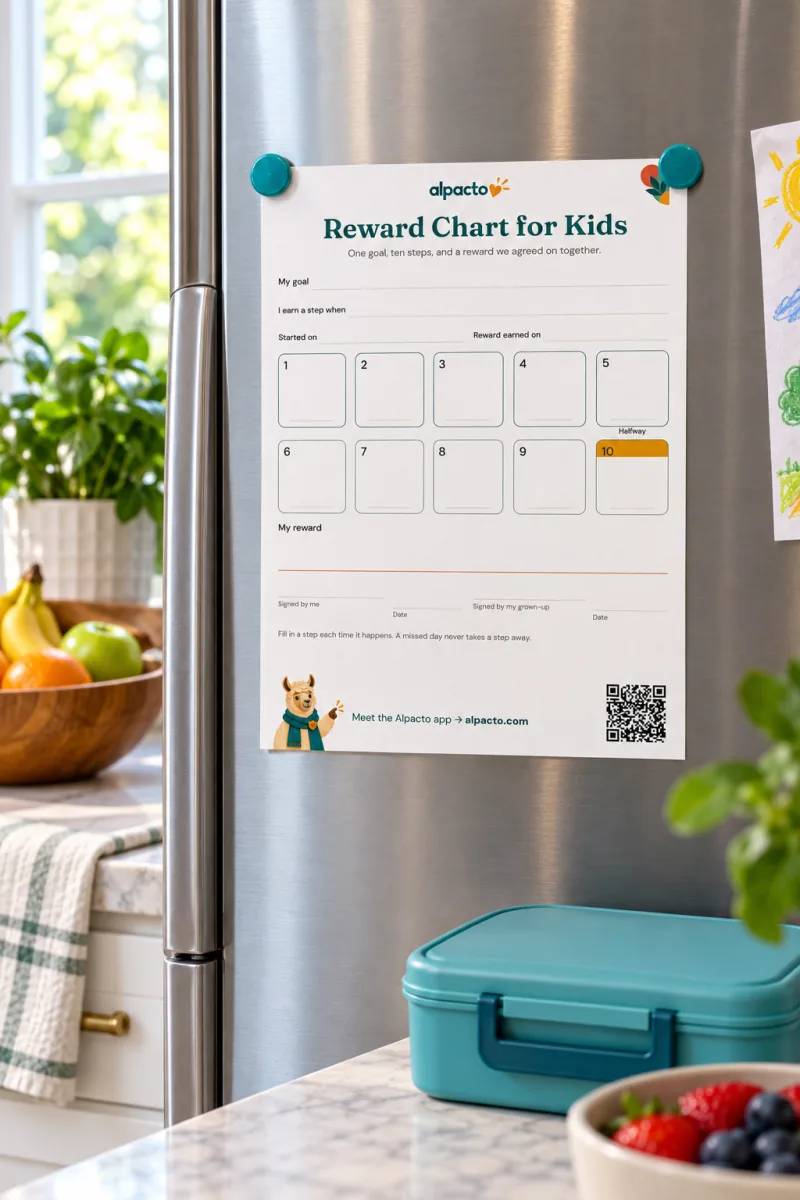
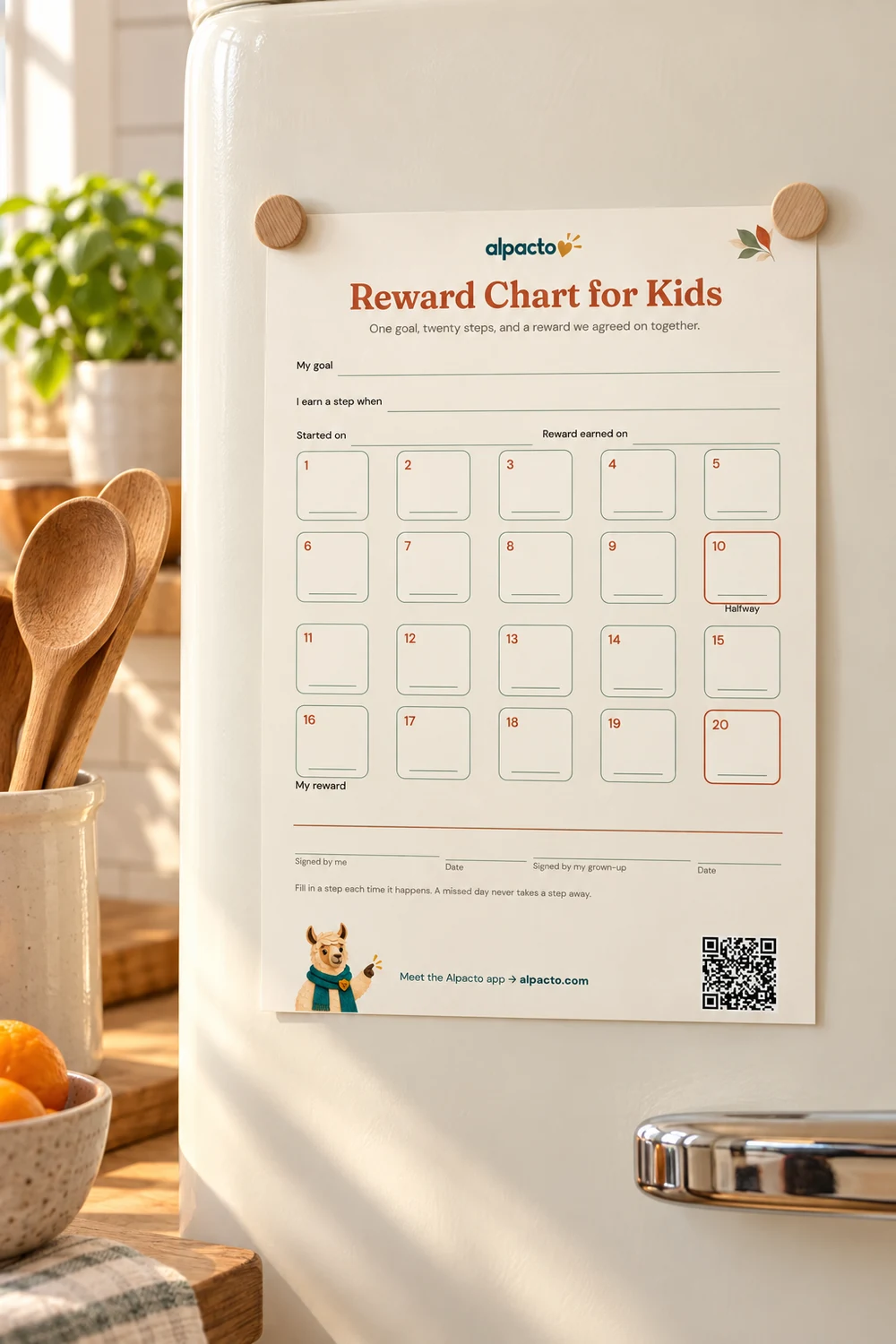
The sheet where it lives: ten steps on the fridge door.
A missed day never takes a step away
The sentence is printed under the track, so the adult holding the pen has already agreed to it. The opposite is the fastest way to kill a chart.
Raising Children Network, the Australian parenting service, puts it this way: “If your child doesn’t earn a star, it’s best to just move on. Also avoid punishing your child by saying, ‘I’ll take a star away’…” An article saying that changes nothing, so we printed it on the sheet.
The track helps. Because the boxes are numbered rather than dated, a skipped Tuesday leaves nothing blank and nothing red.
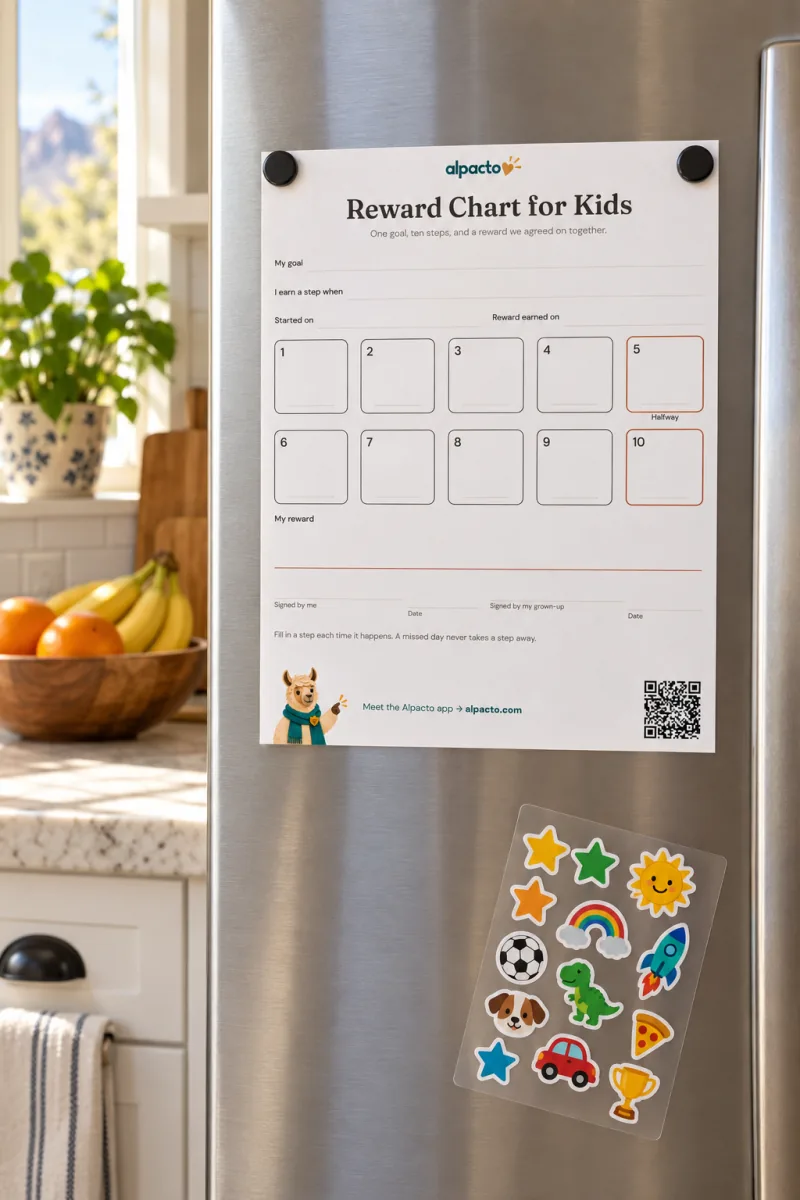
On the fridge with the stickers beside it: the goal, the steps and the reward in one place.
Written down before the first step, dated when it arrives
The reward goes on the sheet before step one, and both of you sign under it. Invented at step nine it is a negotiation; written at step zero it is a promise.
Raising Children Network lists “your child isn’t getting rewards as soon as they earn them” among the reasons charts stop working, and answers it with “make sure to follow through straight away”. So an empty Reward earned on stays visible to everyone in the kitchen.
Download the free printable reward chart
Both sheets in three designs, blank or fillable. A free reward chart with no email and no account.
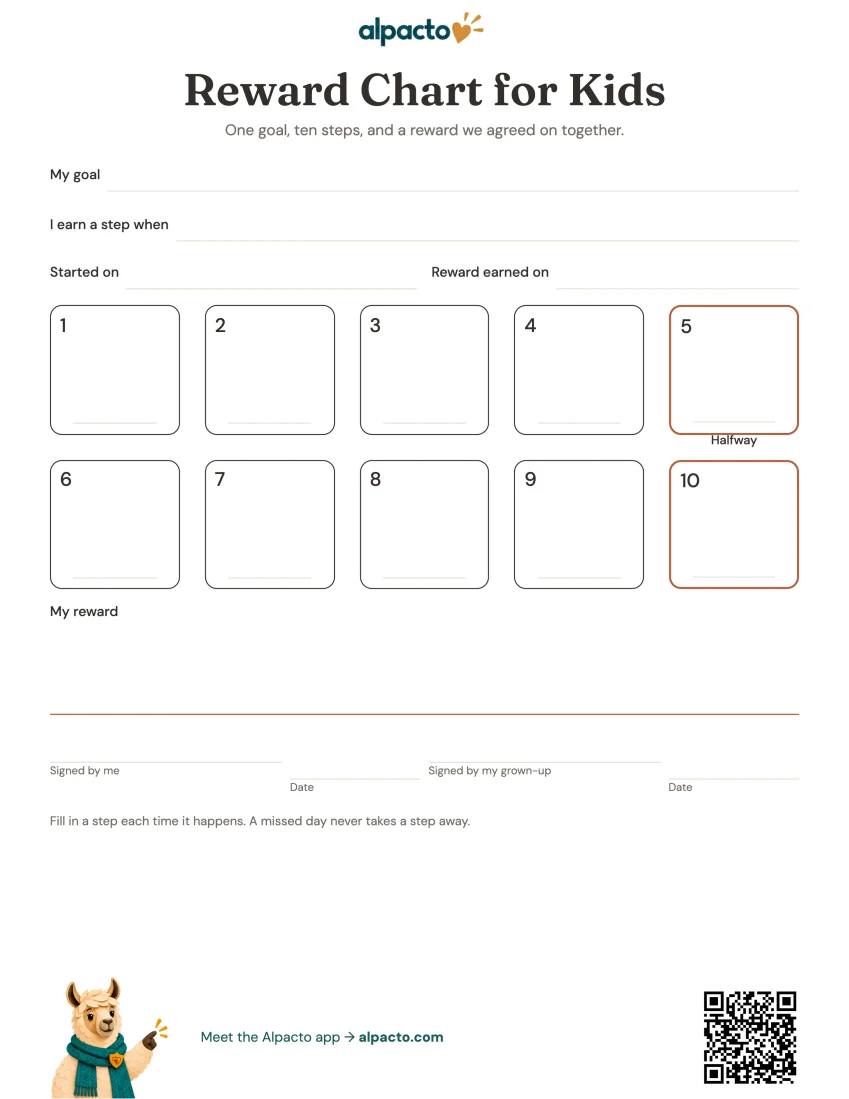
Every file above also exists in A4.
Ten steps or twenty
Ten is for a goal with an end in sight: a fortnight of getting dressed on time. Twenty is for a habit you expect to keep for a month. On both, Halfway is printed under the middle box, a reason to say something warm before interest dips.
If you are not sure, print the short one. “Most children enjoy collecting stickers or tokens at the start. But the novelty can wear off quickly,” says Raising Children Network.
Both sheets print blank: no goals, no rewards, no ages, no stars, no characters. A blank reward chart printable is the point: the two lines at the top belong to you and the child. For a chart that tracks jobs rather than a goal, see the chore chart list.
Questions people ask
What is the best reward chart for kids?
The one a child can read at a glance: a single goal, a stated rule for earning a step, the reward written down in advance. Most free printable reward charts and incentive chart printable packs leave all three to memory. Ours prints them.
How do I create a reward chart for my child?
Agree the goal together, then the sentence that decides what counts, then the reward, and write all three down before the first step. Raising Children Network recommends one behavior at a time and clear, positive wording: “Pick up all the toys from your bedroom floor” rather than “Tidy your bedroom”. Goals about conduct fit a behavior chart with three goals, and a run of morning steps fits a morning routine chart.
At what age do reward charts work?
“Reward charts work well for children aged 3-8 years,” writes Raising Children Network, adding that not all children respond to them, and that this is fine. The sheet has no age printed on it. The twenty-step version asks for a longer memory, so it suits older children, or a reward chart for teens whose goal is their own.
Are reward charts good for ADHD?
We have no source that answers that, so we will not pretend to. The page we quote speaks about a neighbouring group: “Reward charts can work well for autistic children or children with disability. You could ask the professionals working with your child about how to tailor a reward chart to your child’s needs.”
That is the honest limit of what an autism reward chart or an asd reward chart can promise. What this sheet offers is a track with no days on it, so a hard week leaves no gaps to explain.
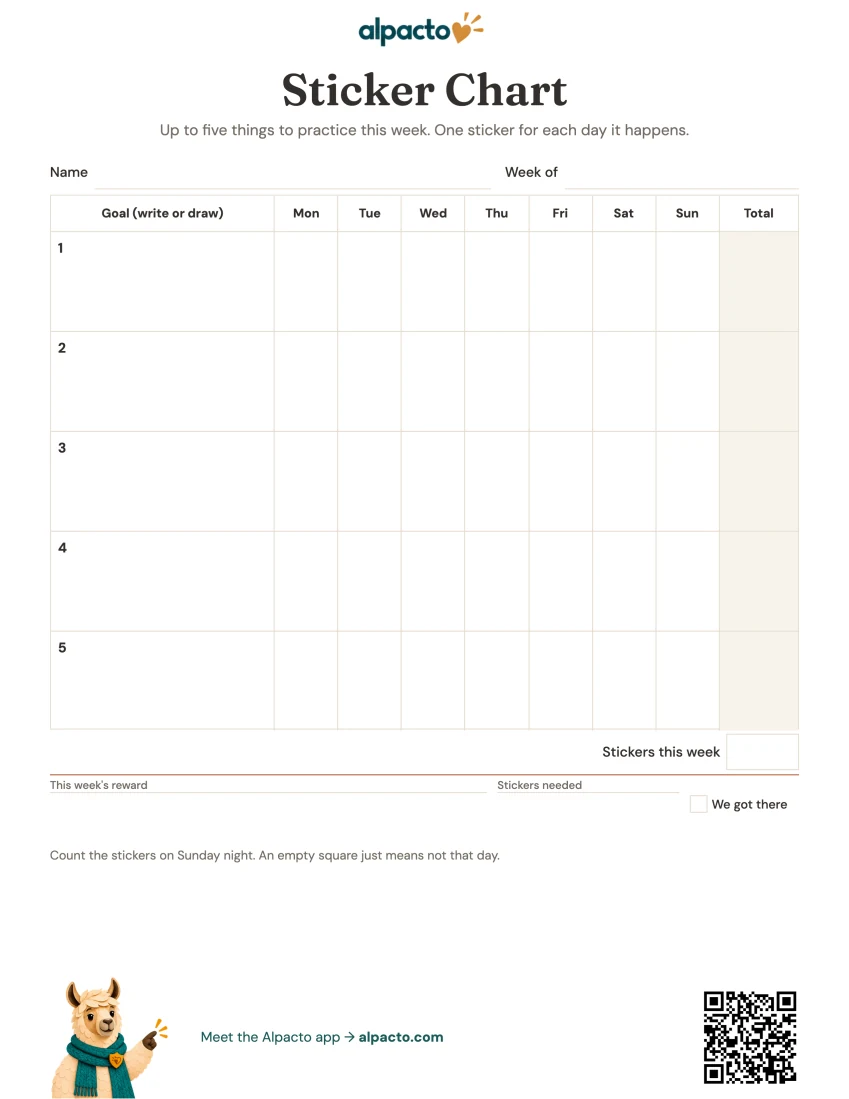
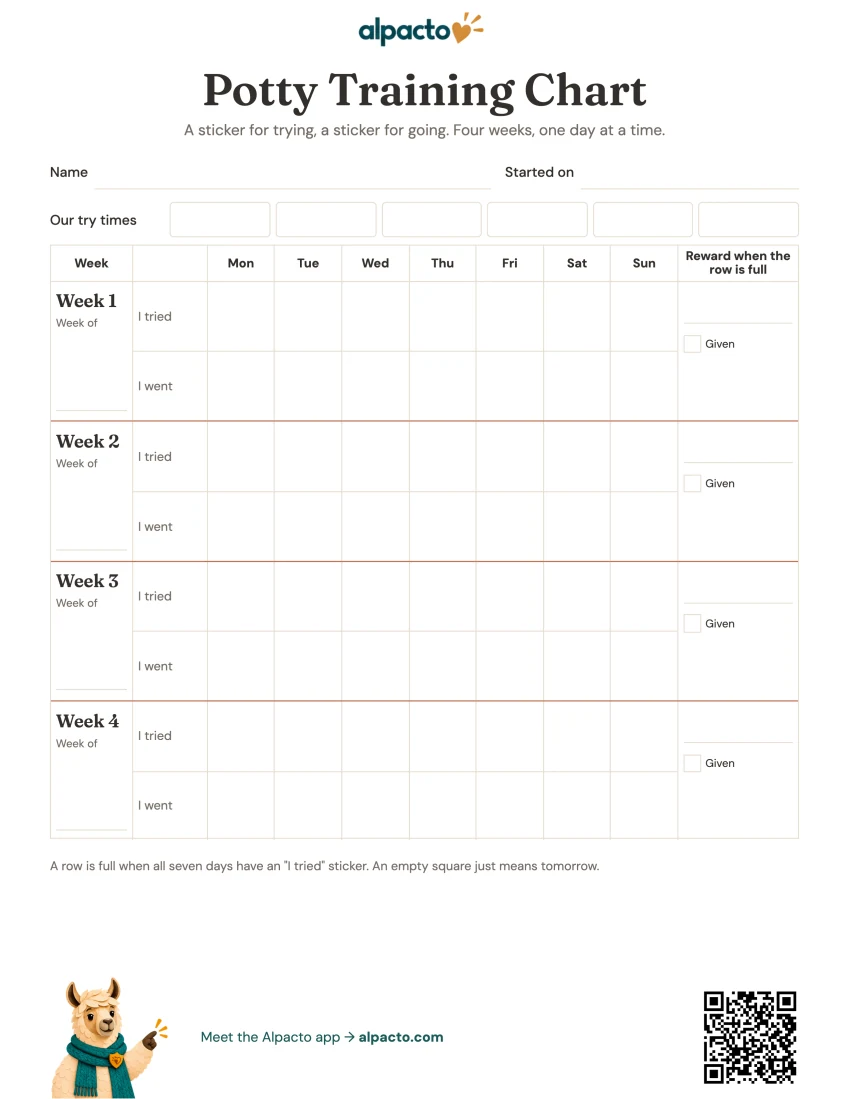
Other free printable sheets
Save this chart to Pinterest
Pin it now and the chart is on your board when you agree the next reward. One goal, a track of ten or twenty numbered steps, and the reward written down and signed before step one.
When the sheet comes off the fridge
Paper works while it is in sight. In Alpacto the same agreement is a routine with the reward already named, and the coins count themselves. Accounts start at 13; younger children use the sheet.