
Alpacto › Free printables › Chore charts › Chore auction
Chore auction: bid chips to skip a chore, and the lowest bid does it
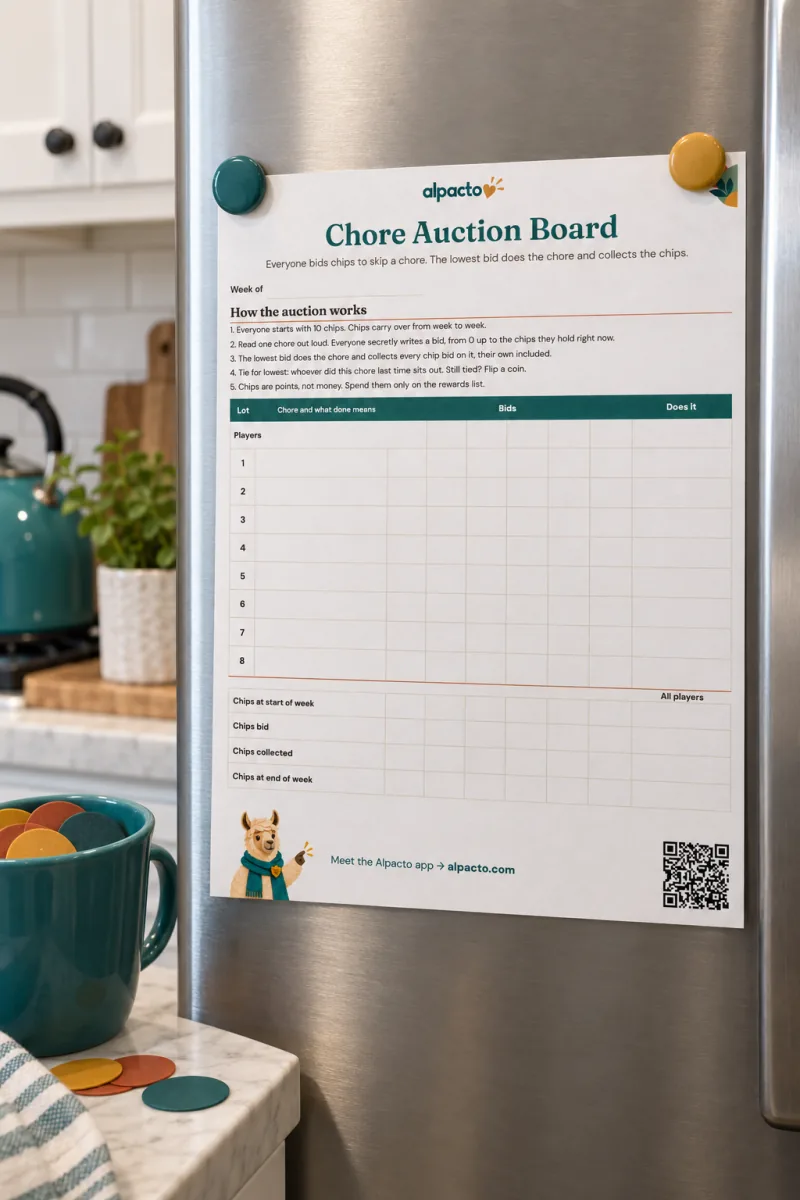
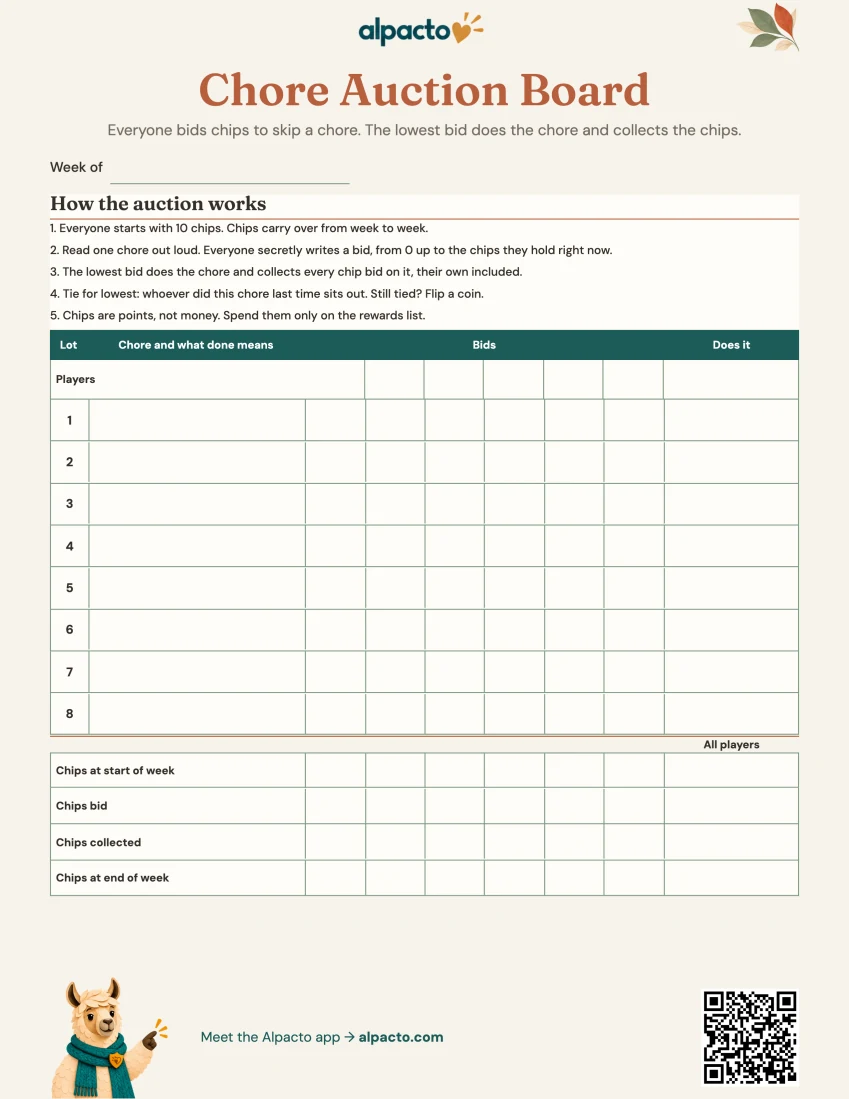
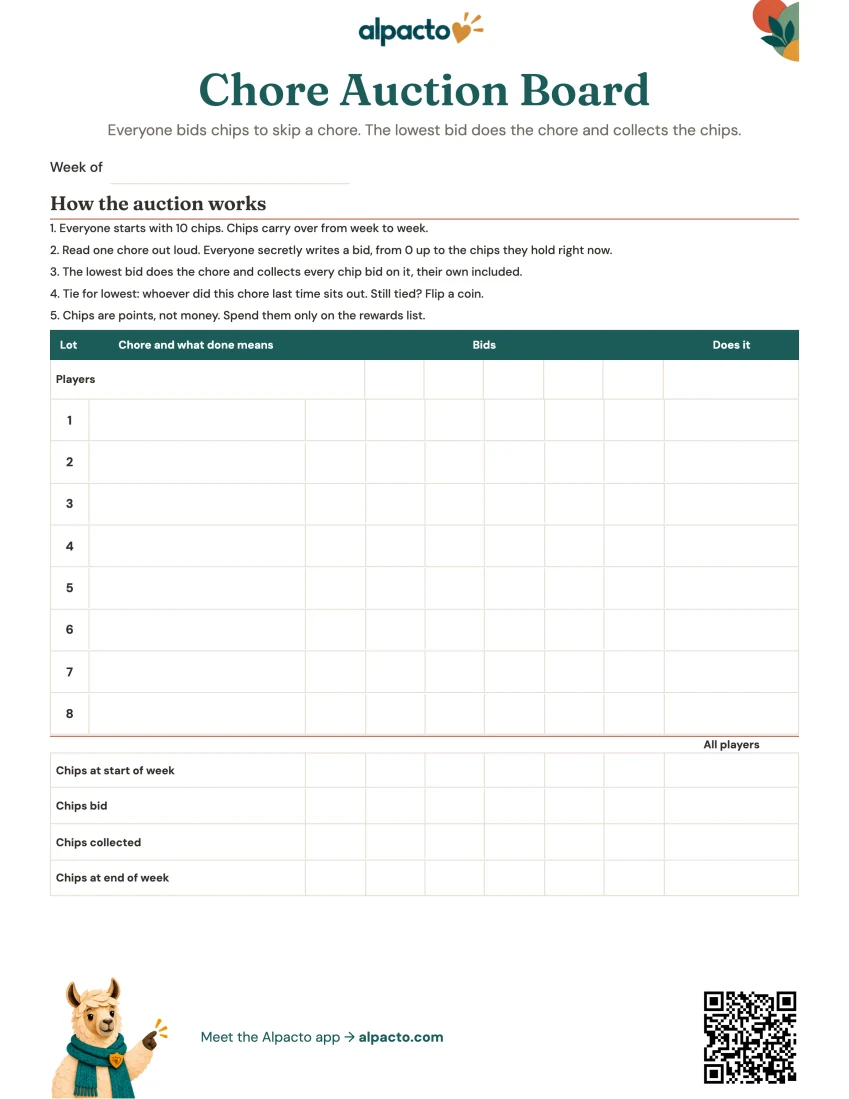
A chore auction turns the jobs nobody wants into a short bidding round once a week. Everyone starts with 10 chips and bids to skip a chore; the lowest bid does it and collects every chip bid on it. This free board runs eight chores a week for up to six players, with the chips to cut out on page two.
- Pages
- Two: the auction board, then chips and a rewards list
- Players
- Up to six, with eight chores a week
- Paper
- US Letter and A4, portrait, print at 100%
- Formats
- Blank and a fillable PDF; the filled-in example is below
- Designs
- Minimal, warm and color
How the chore auction works
These five rules are printed at the top of the board.
- Everyone starts with 10 chips. Chips carry over from week to week.
- Read one chore out loud. Everyone secretly writes a bid, from 0 up to the chips they hold right now.
- The lowest bid does the chore and collects every chip bid on it, their own included.
- Tie for lowest: whoever did this chore last time sits out. Still tied? Flip a coin.
- Chips are points, not money. Spend them only on the rewards list.
The person who minds a chore least bids low, does it and gets richer in chips. The person who hates it pays the others to skip it. Chips never appear or vanish, so the total always equals 10 per player, and four rows at the bottom of the board let anyone check that nobody cheated.
Where the idea comes from
A father on r/daddit made up the game after his kids, 8 and almost 10, got into strategy board games. His rules: “Each kid starts with 10 balls”, and “Whoever bids least does the chore and gets the balls that were bid.” His verdict: “Seems to work better than things like a chore chart or just taking turns.”
He tried it with two players and said he was not sure it would scale to more kids or wider gaps in age. The board makes room for six, so the tie rule and the carry-over of chips are written down rather than argued about each week.
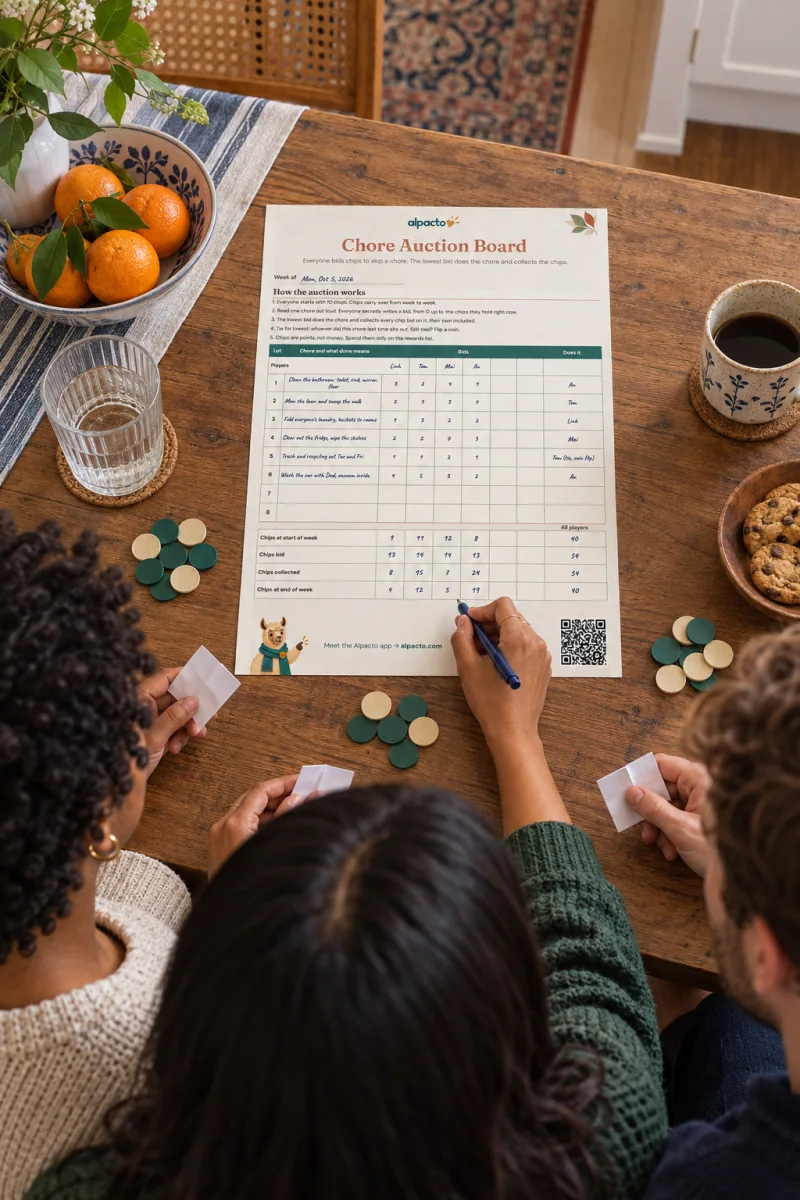
Bids go on folded slips first, then into the row.
One week on the board, filled in
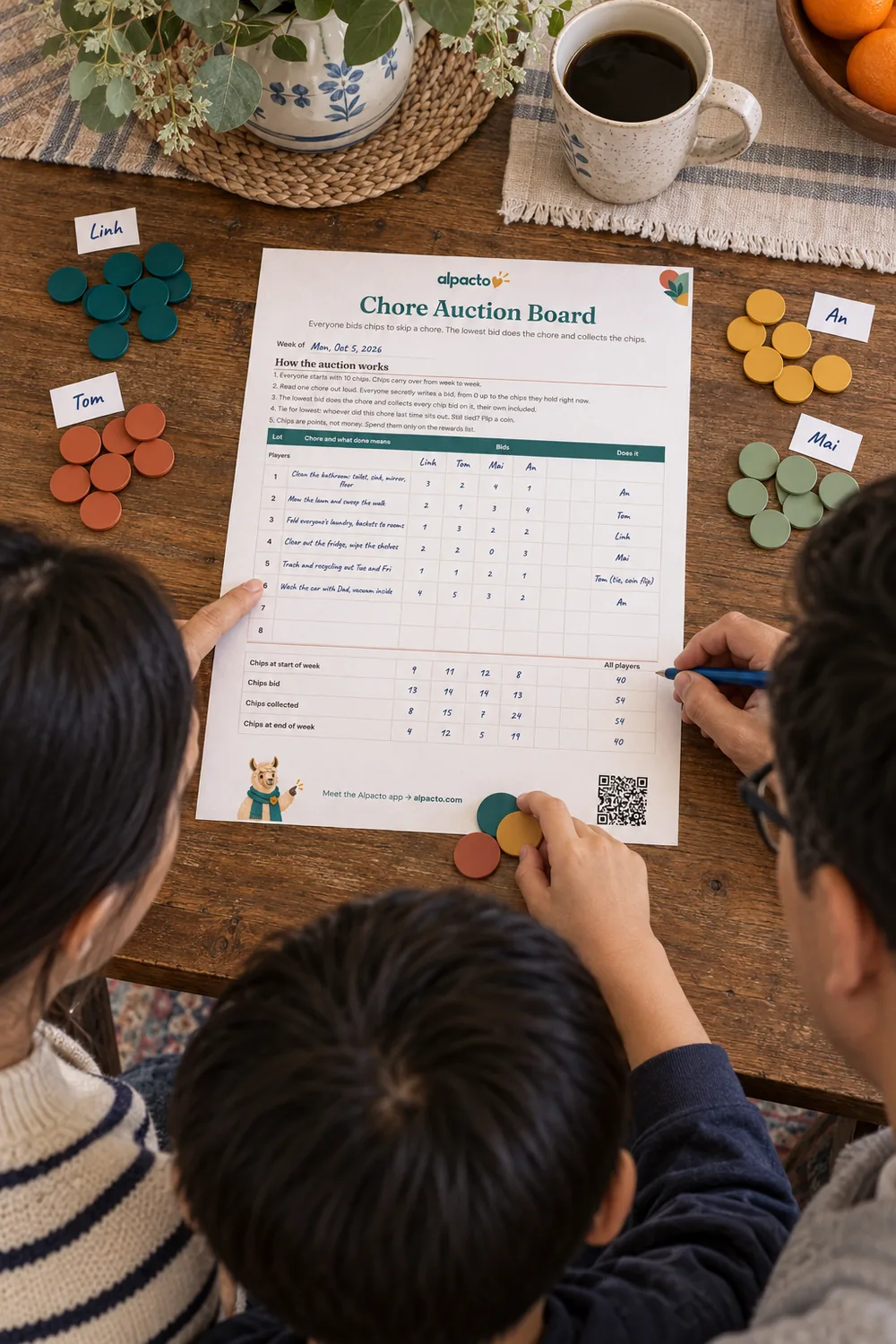
The example shows a family of four in their third week, so nobody starts with exactly 10: Linh has 9, Tom 11, Mai 12 and An 8, which is 40 in all. An bids 1 on cleaning the bathroom, does it and collects 10 chips. Mai bids 0 on clearing out the fridge and still collects 7 from the others.
Lot 5, trash and recycling, ends in a three-way tie at 1. An did it last week and sits out, a coin decides between Linh and Tom, and Tom takes it. By Sunday An has 19 chips, Linh has 4, and the total is 40 again, exactly as it started.
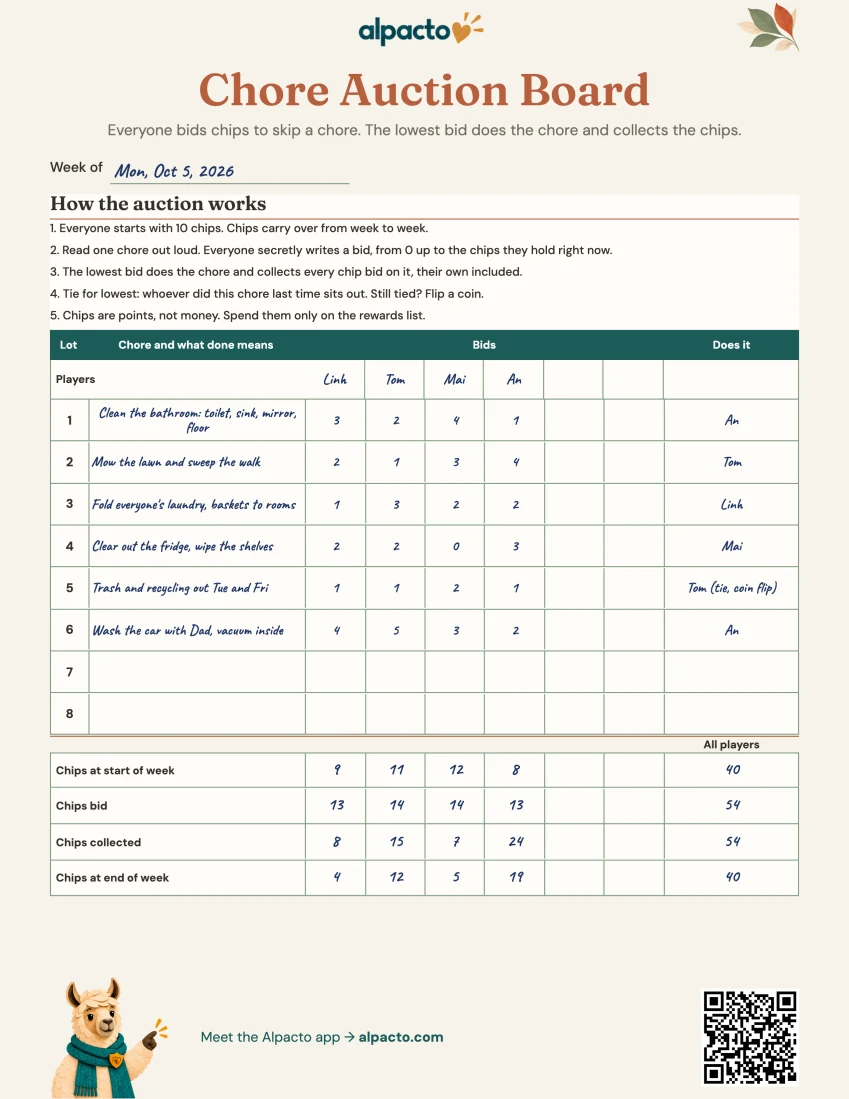
The filled-in example: 54 chips bid, 54 collected.
Download the chore auction board
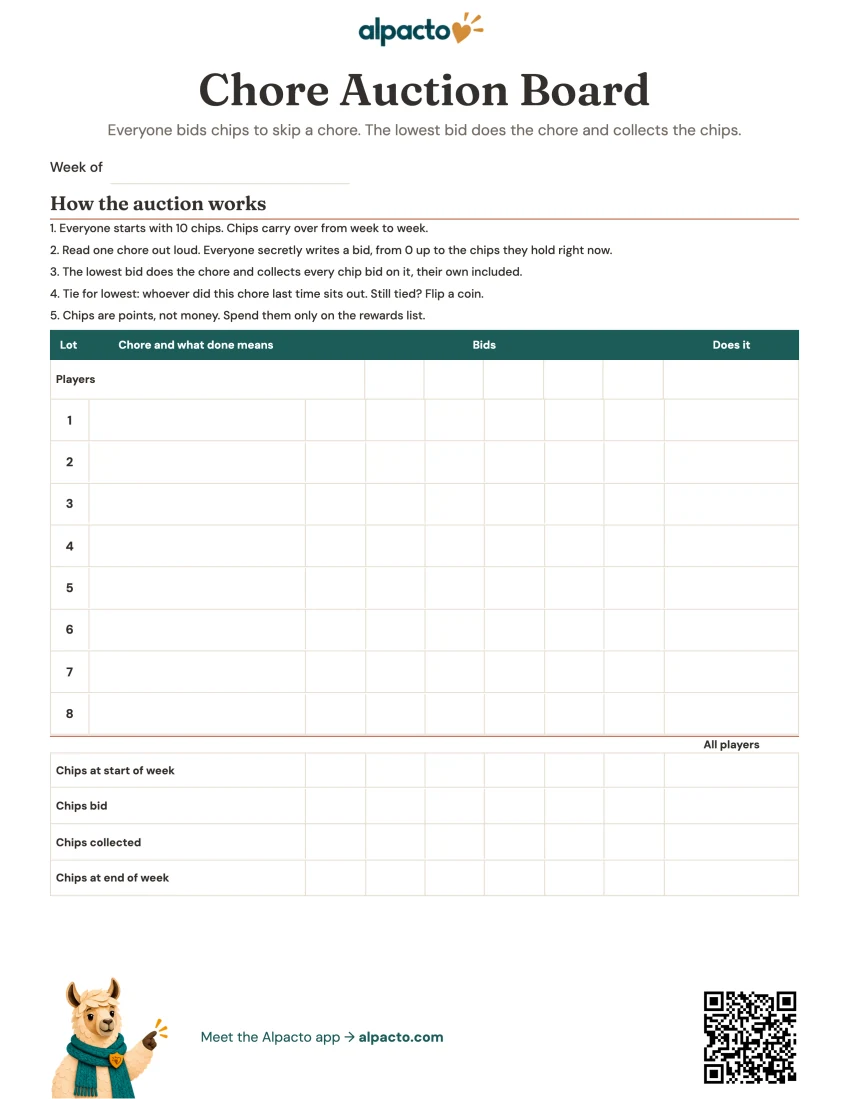
Three designs, two pages in each file. Every file is free, with no email and no account.
Questions people ask
Who is a chore auction for?
Anyone who shares chores and can count chips: children from about 8, roommates, couples. The original game ran with two kids aged 8 and almost 10; for younger children a reward chart for kids is simpler to follow.
What do the chips buy?
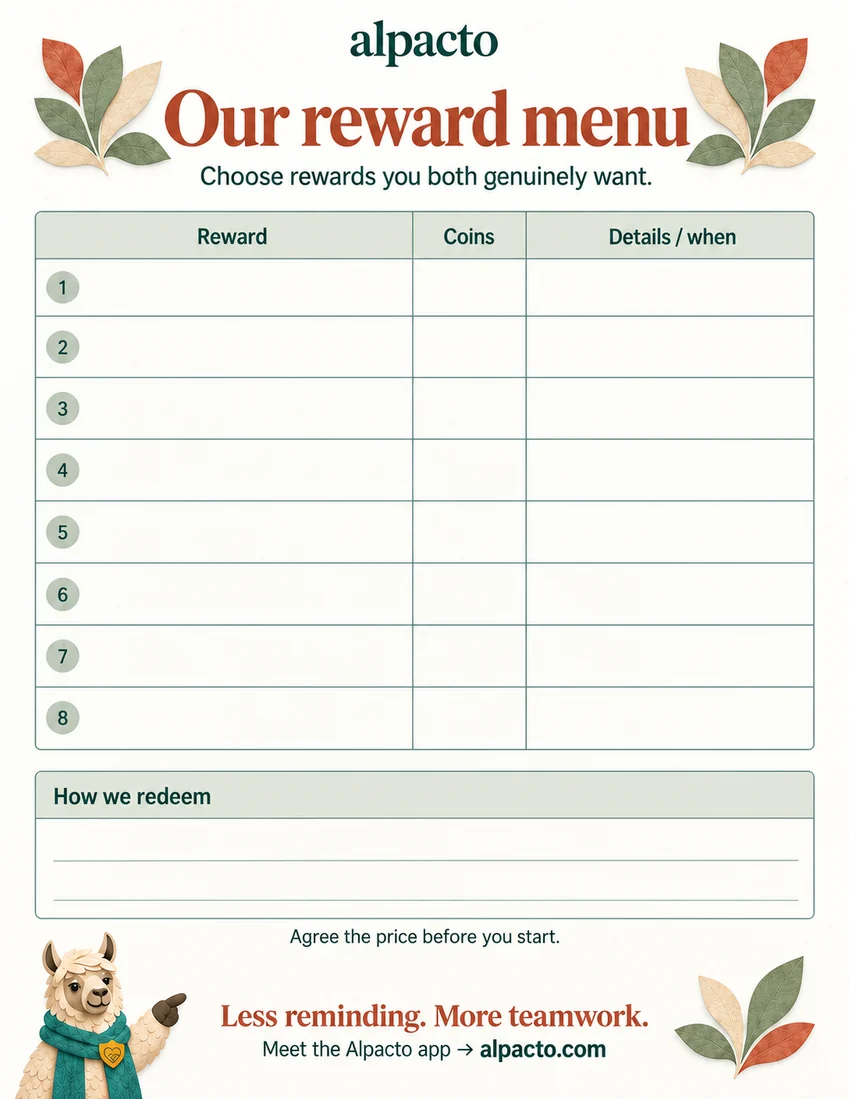
Whatever you write on the rewards list on page two, with a price in chips next to each line. The example family priced picking the Friday movie at 5 chips and a night off from dinner cleanup at 20.
Do we have to cut out the paper chips?
No. Page two says: “Cut out 10 chips for each player. Coins, buttons or dried beans work too.” In the minimal design each player’s chips carry a different small pattern, so they stay apart in black and white.
Can I fill it in on screen?
Yes. The fillable PDF has 115 fields: names, chores, every bid, who does it, the four total rows, and the rewards list. Print it afterward, or keep it on a shared screen.
Other free printable sheets
Save this board to Pinterest
Pin it now and the board is ready for the next family meeting. Ten chips each, eight chores a week, and the lowest bid does the job.
After the auction, in the app
There is no auction in Alpacto. A chore someone wins can become a task with a reward in coins, set to the chips bid on it: one person marks it done and the other confirms. Coins stay inside Alpacto and are never money.