
Alpacto › Free printables › Holidays › Family meeting agenda
Family meeting agenda: one page, twenty minutes, every task with a name
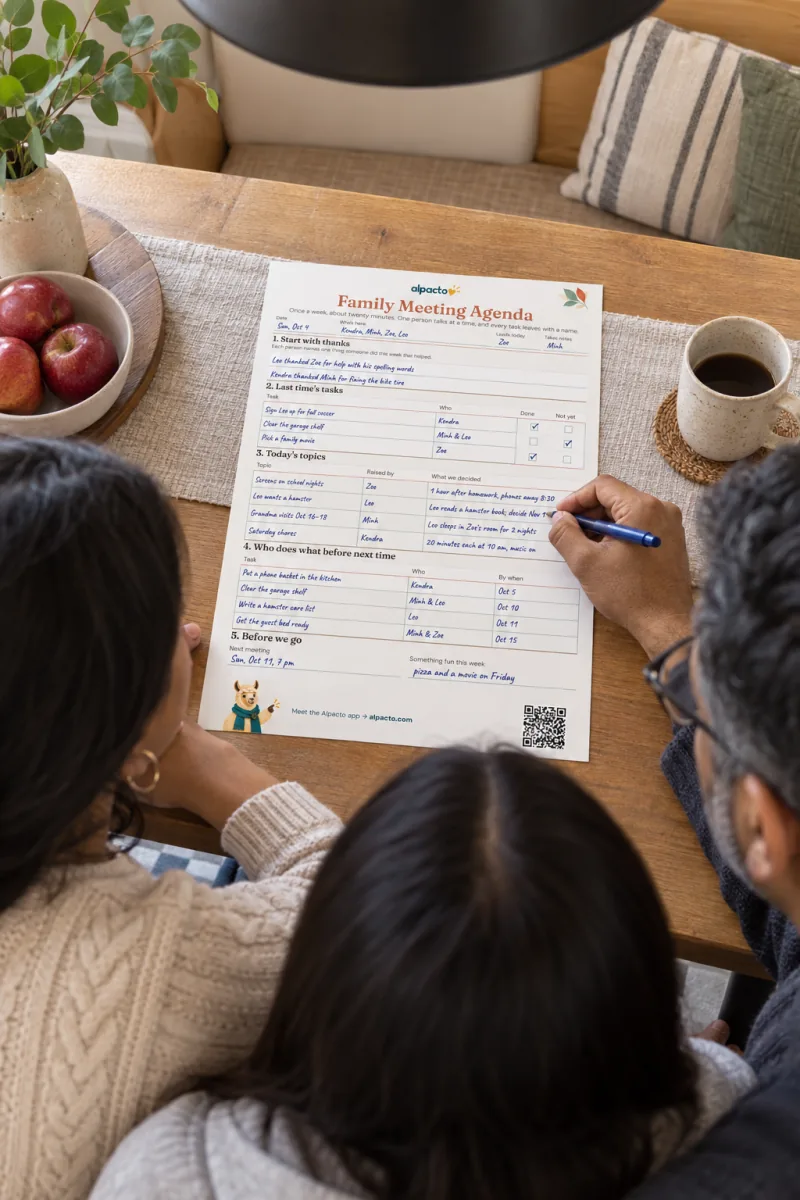
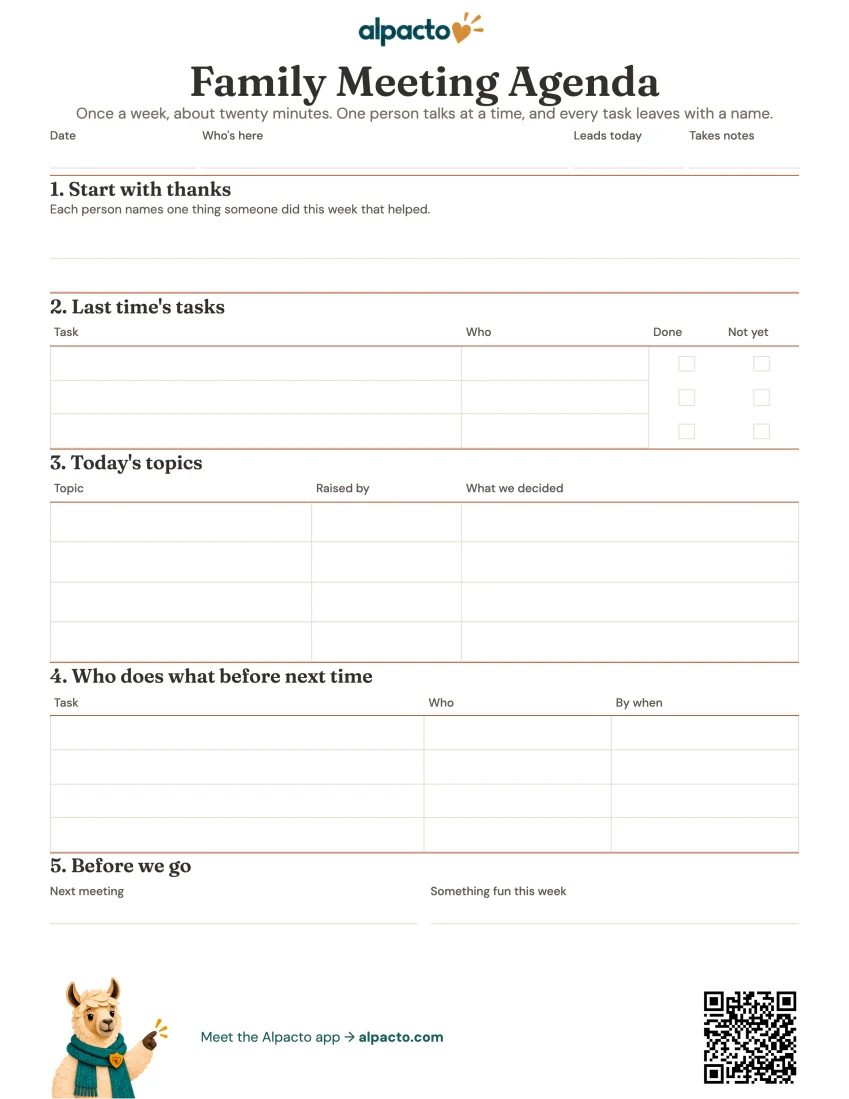
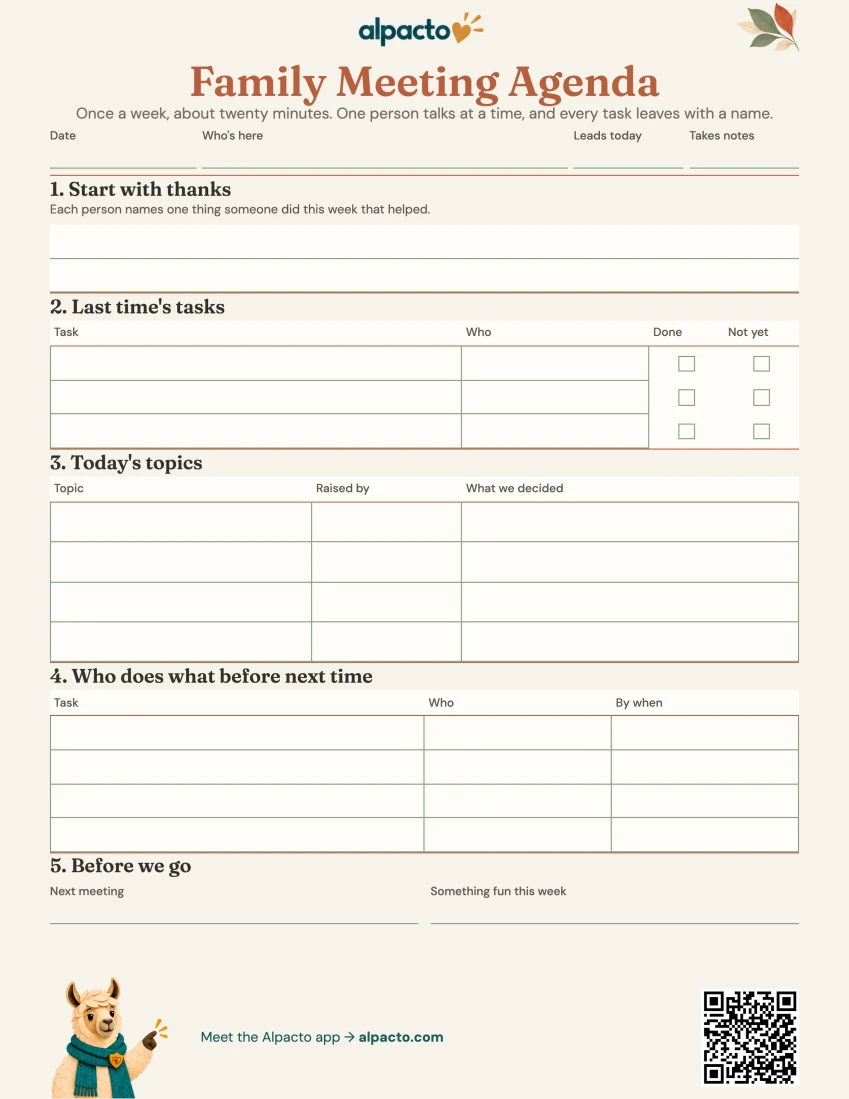
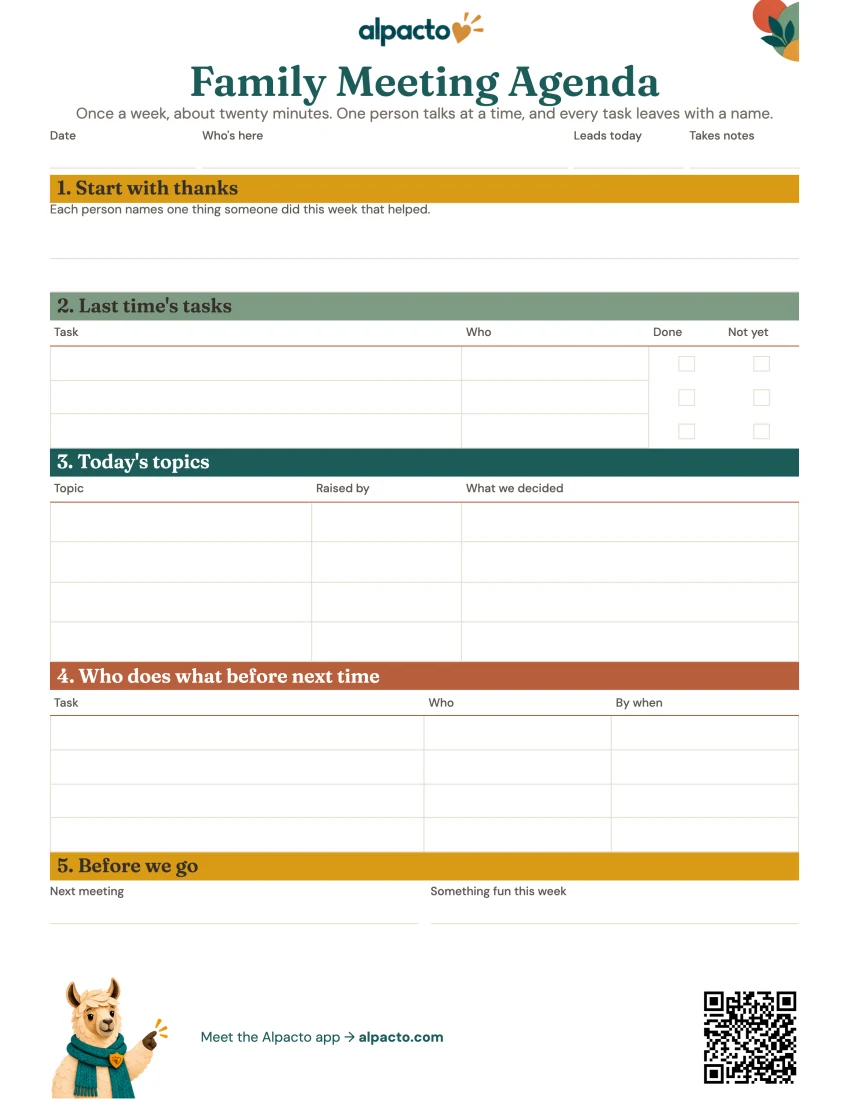
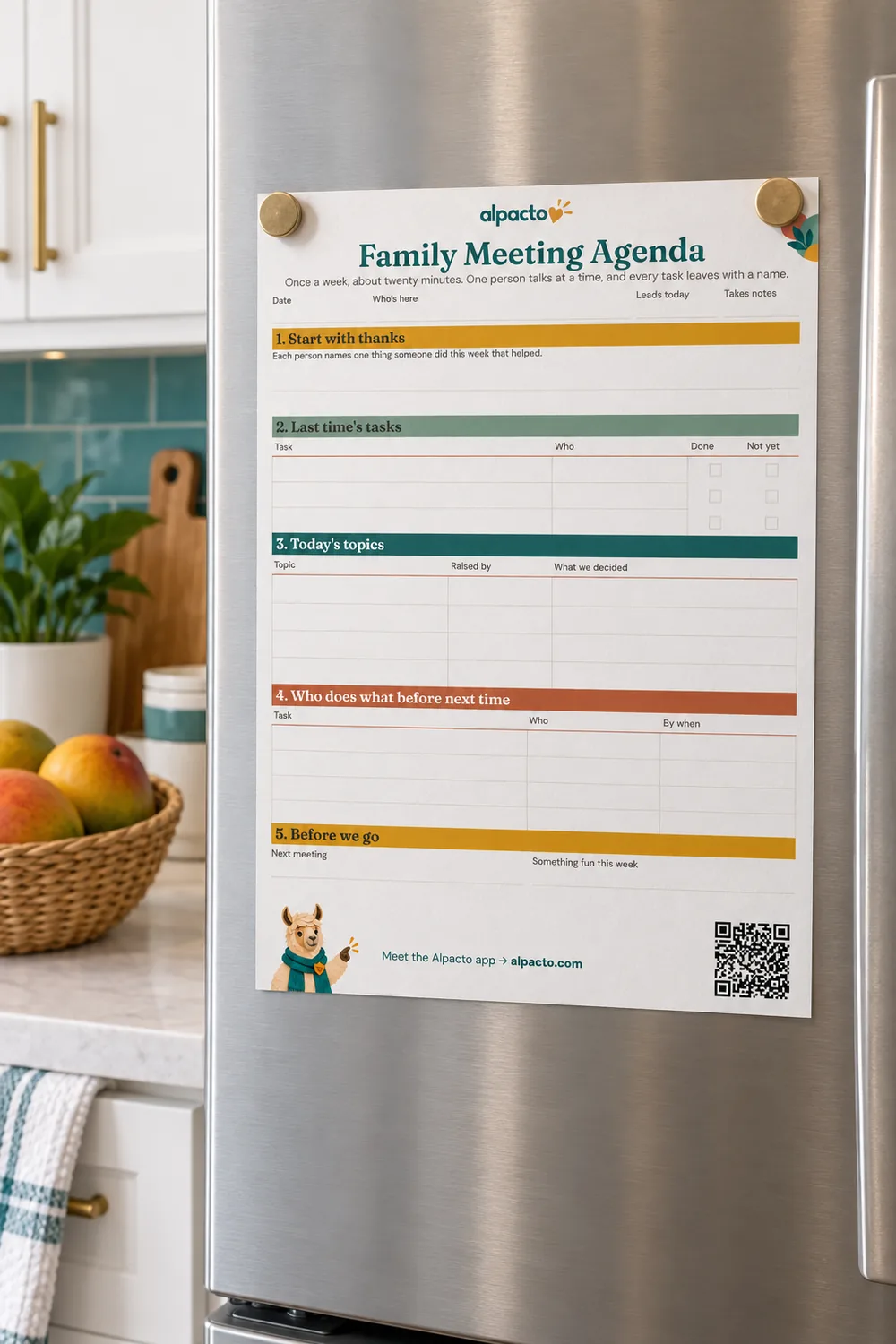
This family meeting agenda fits a whole weekly meeting on one page. You thank each other, check last time’s tasks, talk through today’s topics and leave with who does what by when. Who leads and who takes notes changes every week, so a child can run it too.
- Sheet
- One page, five sections, one meeting
- Paper
- US Letter and A4, portrait
- Versions
- Blank, and a fillable PDF with 44 fields
- Designs
- Minimal, warm and color
- For
- Parents and kids, a couple, or adults sharing a home
What is on the sheet
Date, Who’s here, Leads today, Takes notes
The top row; the two roles change hands every week.
Start with thanks, Last time’s tasks
Two lines for thanks, then three old tasks ticked Done or Not yet.
Today’s topics, Who does what before next time
Four topics with Raised by and What we decided; four tasks with Who and By when. Then Before we go: the next meeting and something fun.
How to run a 20-minute family meeting
The subtitle on the sheet sets the pace: “Once a week, about twenty minutes. One person talks at a time, and every task leaves with a name.” The leader reads each section aloud:
- Start with thanks. “Each person names one thing someone did this week that helped.” The note-taker writes two down.
- Last time’s tasks. Copy section 4 of the last sheet here and tick Done or Not yet; a Not yet moves to section 4 with a new date.
- Today’s topics. Each topic gets a decision, even if it is a date to decide later.
- Who does what before next time. Every decision that needs work gets a name and a date.
- Before we go. Write down the next meeting and one fun plan for the week.
Keep the same slot every week; the AAP suggests “a regular, pleasant time,” such as after dinner.
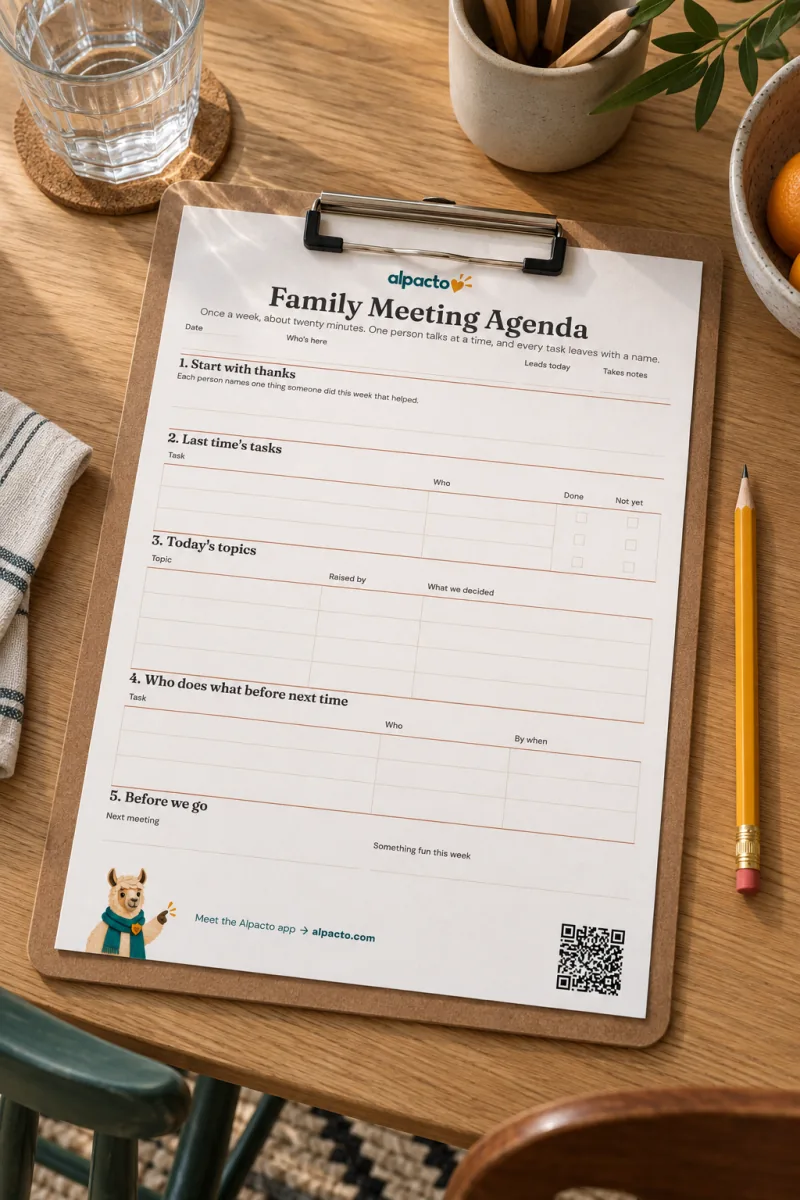
Blank, ready for the first meeting.
A family meeting agenda sample, filled in
Kendra, Minh and their kids Zoe and Leo meet on Sunday, October 4. Zoe leads, and Minh takes notes. Their four topics:
| Topic | Raised by | What we decided |
|---|---|---|
| Screens on school nights | Zoe | 1 hour after homework, phones away 8:30 |
| Leo wants a hamster | Leo | Leo reads a hamster book; decide Nov 1 |
| Grandma visits Oct 16–18 | Minh | Leo sleeps in Zoe’s room for 2 nights |
| Saturday chores | Kendra | 20 minutes each at 10 am, music on |
And the tasks that leave the table:
| Task | Who | By when |
|---|---|---|
| Put a phone basket in the kitchen | Kendra | Oct 5 |
| Clear the garage shelf | Minh & Leo | Oct 10 |
| Write a hamster care list | Leo | Oct 11 |
| Get the guest bed ready | Minh & Zoe | Oct 15 |
The garage shelf was already on last week’s list and got a Not yet, so it came back with a new date. The hamster got neither yes nor no: Leo reads a book first, and the family decides on November 1.
The sheet’s example; the family is invented.
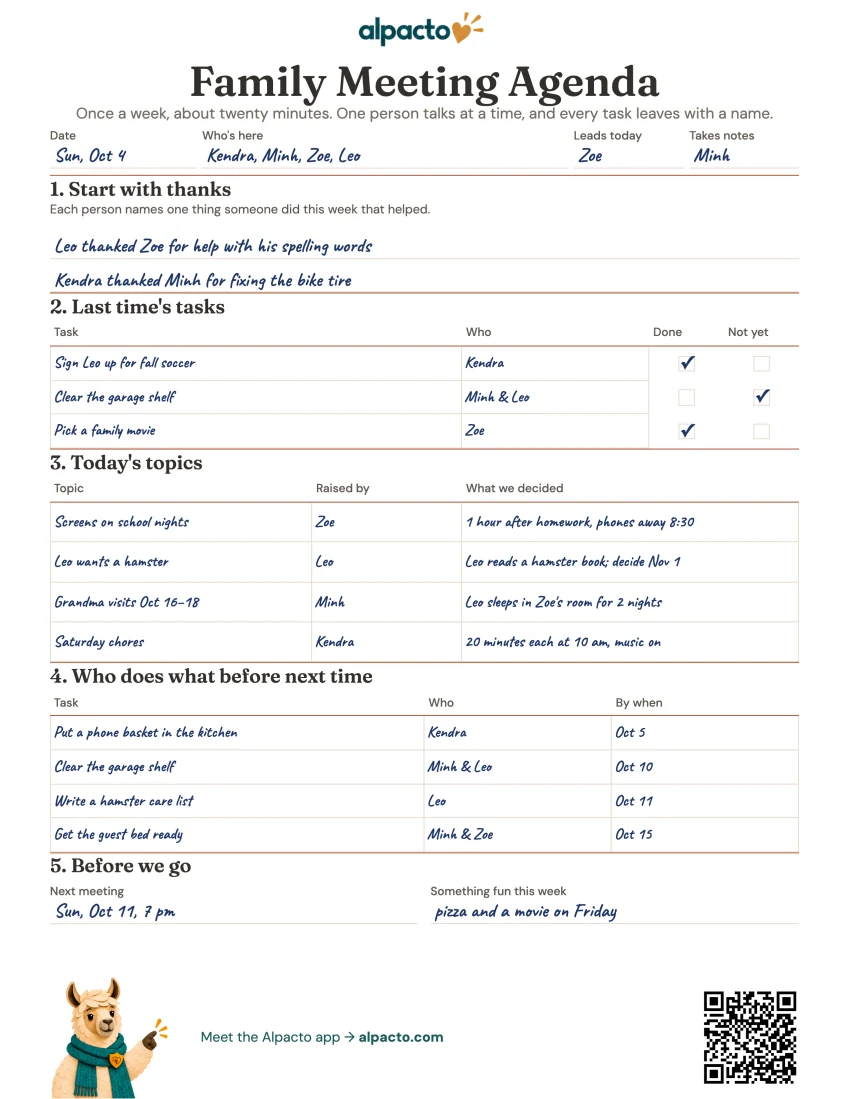
The filled-in example, minimal design.
Why the meeting opens with last time’s tasks
A decision nobody checks is easy to drop by midweek. Section 2 checks them first, while everyone is at the table.
Jane Nelsen’s Positive Discipline method has the same check: “We can evaluate how the solution or solutions worked during our next meeting, in one week.” Between meetings, Connected Families suggests a question instead of a lecture: “What did we decide at the family meeting?”
The filled-in sheet stays up until the next date in section 5, and its section 4 becomes next week’s section 2.
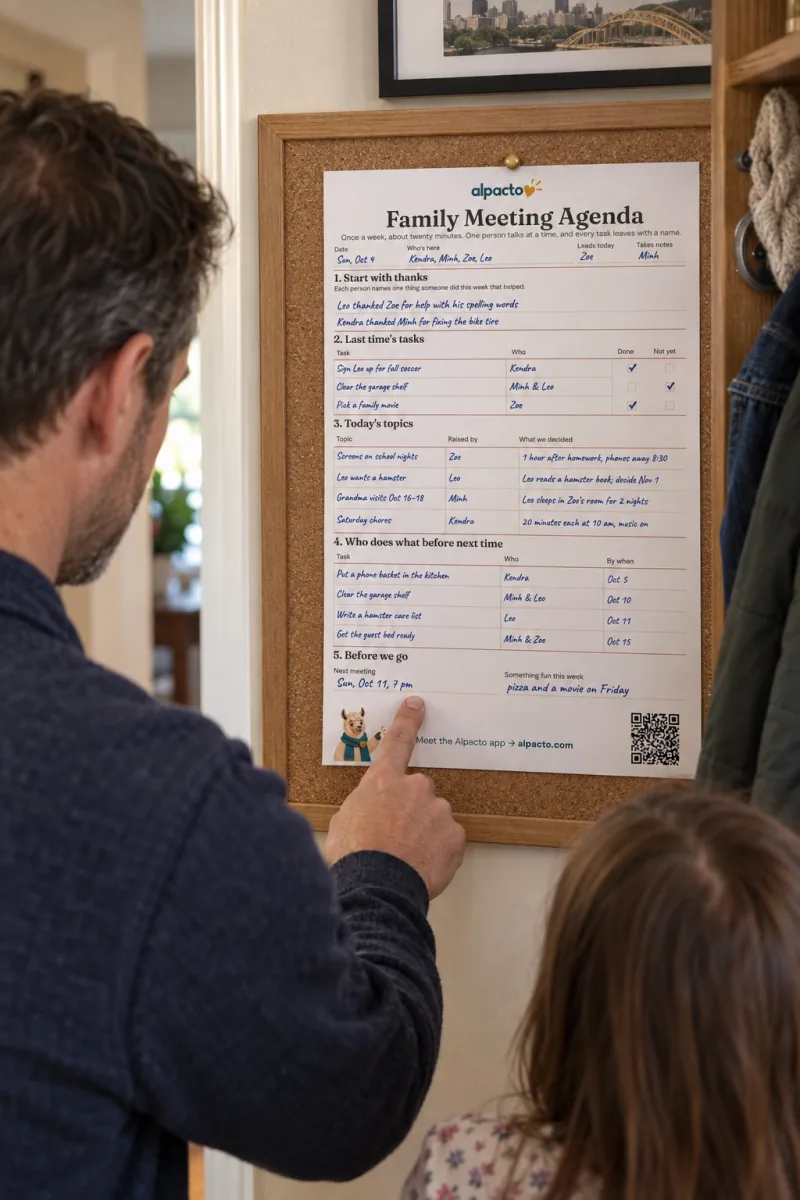
The next date, where everyone passes it.
Ground rules that keep kids talking
From the American Academy of Pediatrics:
- “Let each family member speak without criticism or interruption.”
- “Remember that the meeting is not a time or place to scold, punish, recall past mistakes, blow off steam or single out a particular person.”
- “Everyone should understand and accept that parents have the final word in difficult decisions.”
HealthyChildren.org (AAP), How to Have a Family Meeting, updated 2/22/2022.
Nelsen puts the usual mistake plainly: “Parents need to talk less and listen more.” Handing a child Leads today helps with that.
Family meeting agenda topics that work
Anyone can raise a topic; on the example, the kids raised two of four. Good topics are small and end in a decision:
- Screens on school nights, bedtime, phones at dinner.
- Saturday chores and who takes which job.
- A pet, a sleepover or a new activity someone wants.
- Guests, trips and school events in the next two weeks.
Keep one child’s grades or a fight between two siblings off the list. The AAP says issues like these “should be taken up separately and individually.”
The same sheet for adults or a shared house
The sheet prints no roles like parent or kid, so it works as a household meeting agenda for a couple or roommates. The topics turn to bills and guests; the tables stay the same. If the weekly jobs are the fight, split them first with the chore split calculator.
Download the family meeting agenda template
Three designs in US Letter and A4, blank or fillable, free with no email or account. Print a fresh family meeting template each week.
Questions people ask
What should a family meeting cover?
Thanks, a check of last time’s tasks, today’s topics with a decision each, new tasks with a name and a date, and the next meeting, in that order.
How long should a family meeting last?
About 20 minutes. The AAP says “no more than 20 or 30 minutes unless your family wants to continue,” and Nelsen suggests 15 to 30, ending on time even with topics left over.
Can kids lead the meeting?
Yes, from early school age: Connected Families’ kids started leading “when they were about 7 years old.” Nelsen says children under four may not be ready yet.
Can I fill it in on my phone?
Yes. The fillable PDF has 44 fields, including the Done and Not yet checkboxes.
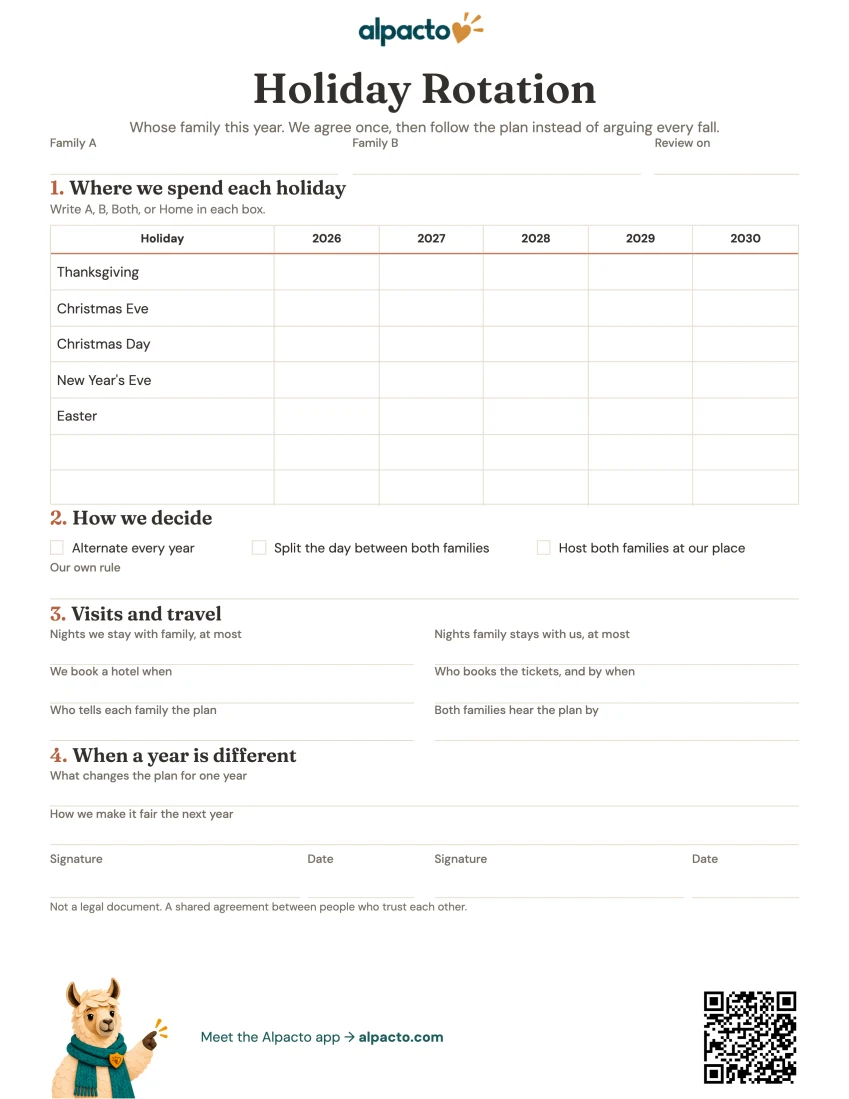
Other free printable sheets
Save this agenda to Pinterest
Pin it now and the sheet is ready for Sunday evening. One page, twenty minutes, and every task leaves the table with a name and a date.
The same meeting, in the app
In Alpacto the weekly meeting can be a routine with visible check-ins, and each row of section 4 a task: one of you marks it complete, the other confirms. Accounts start at age 13.