
Alpacto › Challenges & games › Healthy habits for couples
Healthy habits for couples: 40 to choose from, and a 30-day tracker for two
Healthy habits for couples are small things you do on a schedule: a thank-you every day, a walk after dinner, one money talk a week. Below are 40 of them in five areas. Pick up to three, set how often and who does them, and print a 30-day tracker with two rows per habit.
Three habits, two rows each, thirty boxes.
In short
Start with three habits at most, each small enough to do in ten minutes. Agree how often and who does it. Each of you checks only your own box.
Thirty days is a first stretch, not the finish line. Print a second sheet after day 30 and keep the habits that stuck.
Healthy habits for couples: pick up to three and print your tracker
Tick up to three habits below. Then set how often and who does each one, add your names and print the tracker. Nothing you type leaves this page.
Health together
Things that are easier with a partner who is also doing them.
Phone-free time
Short stretches where the phone is not in the room.
Set up your tracker
Your 30-day tracker
Print opens your browser’s print window; the sheet prints wide. Choose “Save as PDF” there if you would rather keep a file.
Habits of happy couples: what research-based guides say
The University of Florida’s SMART Couples program lists 10 simple habits of happy couples. It says researchers know of habits and ways of communicating that seem to help couples feel more satisfied, and that no single secret exists.
Most of its ten are in the list above, under connection and health. Shared rituals are the weekly date and the Sunday reset, and repair lives in the rules for fighting fair. The money, home and phone-free habits are our additions, not from that page.
Why three habits, and why 30 days
Good habits for couples start small. Three is our rule of thumb, not a study: each habit needs attention from two people. Start with one from connection, one from health or home, and one more you choose.
The UCL Health Behaviour Research Centre blog calls the “21 days” figure a myth. In the Lally study the best estimate was 66 days, and it differs by person and habit. So 30 days is a first stretch; print a second sheet after it.
Daily habits for couples: how two people run a tracker without nagging
- Agree on the smallest version. “Tidy for ten minutes” counts; “clean the house” does not.
- Pick one check-off time. Both of you tick the boxes at the same hour, for example after dinner.
- Check only your own box. Nobody grades the other person. A blank box just means not that day.
- Decide what a missed day means before day one. “We check the next one together” is enough, and it keeps one miss from ending the sheet.
- Write the reward first. A shared one, such as a meal out, so that day 30 is a count, not a negotiation.
The habits do not have to match. One of you can do the evening tidy while the other takes the walk, and the “Who” option lets the same habit alternate days. The 30-day habit tracker page has the one-habit-each version, with a worked example.
Paper or an app: where a shared habit works best
For many couples a printed sheet on the fridge is enough. It breaks down when one of you travels, when the sheet gets covered with other papers, or when you each remember a different deal.
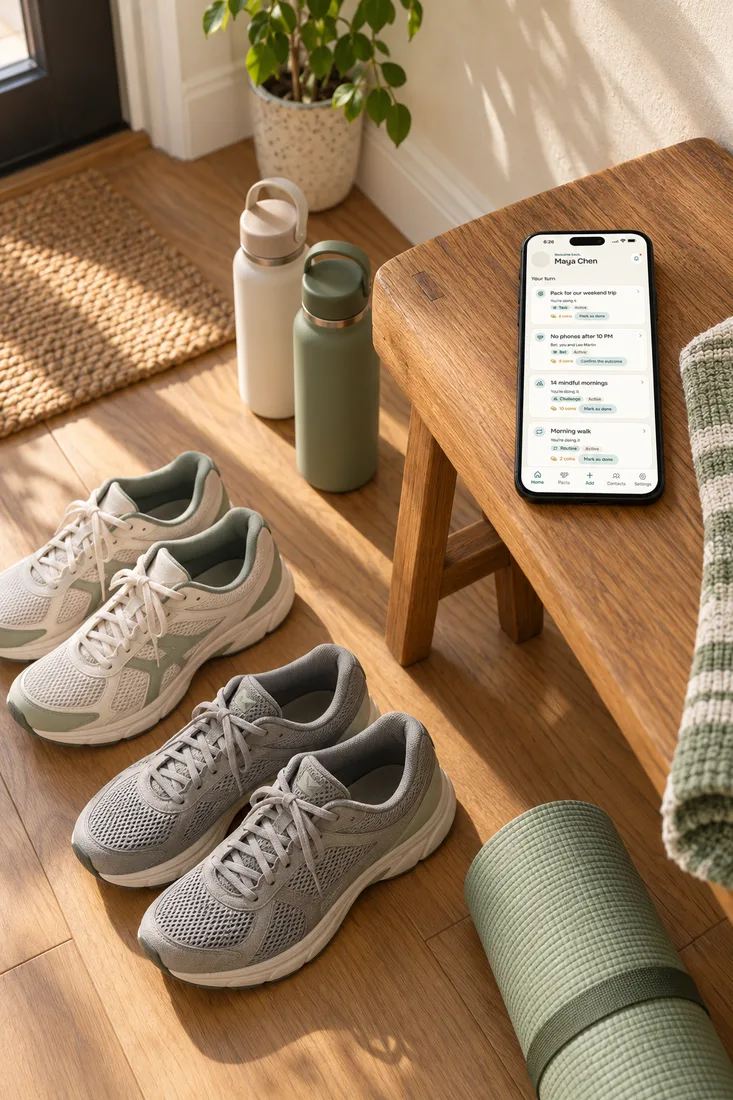
That is where Alpacto fits, and it is our own app. A habit becomes a pact you both agreed to: what counts as done, by when, and what it is worth in coins, a reward you choose together and not money. The habit tracker app for couples comparison sorts seven other apps by who sees the streak.
Questions people ask
What are healthy habits for couples?
Healthy couple habits are small, repeated actions such as thanking each other, going to bed together, a regular money talk and phone-free time. The list above has 40. The habits of healthy couples in the UF guide are ten that seem to help couples feel more satisfied.
What are the habits of happy couples?
According to UF/IFAS SMART Couples: loving texts, talking about what matters, daily affection, turning toward bids, fun, gratitude, shared rituals, repair, small kindnesses and a shared bedtime. Pick the ones that need the least effort first.
How many habits should a couple start with?
Three at most, and one is fine. That is our suggestion rather than a research finding. More than three makes the tracker a chore.
How long does it take to form a habit?
On average about 66 days in the Lally study that the UCL blog describes, though the time varies by person and behavior. The 21-day figure is a myth, so plan a second sheet after the first 30 days.
What is the 7-7-7 rule for couples?
It is a date every seven days, a night away every seven weeks and a romantic vacation every seven months, per Personal Psychology. It is a popular schedule, not a research finding. The “weekly date” habit above is its first part.
What is the 3-3-3 rule for intimacy?
We found no authoritative source for an intimacy rule by that name. On the Personal Psychology page, 3-3-3 is a framework for the early stages of dating.
What is the 3-6-9 rule in relationships?
We found no authoritative source or research for it. Online versions treat three, six and nine months as milestones in a new relationship, not as habits.
What if my partner does not want to track habits?
Offer a trial of one habit for two weeks and track your own box only. The person who does not want a sheet often still does the habit. If a sheet feels like grading, drop the sheet and keep the habit.
A habit both of you can see
On paper, each of you ticks your own box. In Alpacto one of you proposes the habit as a pact, the other accepts, and both see what was agreed and what is still owed. It is on iPhone and Android.